The Sacred Sites of Taita Hills

Taita Hills is a mountainous area in Southeastern Kenya forming the northernmost outcrop of the Eastern Arc Mountains. The area is favored by regular rainfall and is known for endemic wildlife including African Violets, endangered birds and amphibians. The Taita plains are used mainly for grazing and sisal cultivation, while the hills, which were once covered by large forests, are used for agricultural activities, and more uniquely, they host sites that are considered sacred by the local communities.

Our journey starts with a short hike to Mwachora hills which, as our guide enlightens us, were where sorcerers were executed-by throwing them over the hill. The local people believed that the sorcerers were evil to the society and this was only punishable by death. From the hills one has a great view of the surrounding towns like Wundanyi and Voi town.
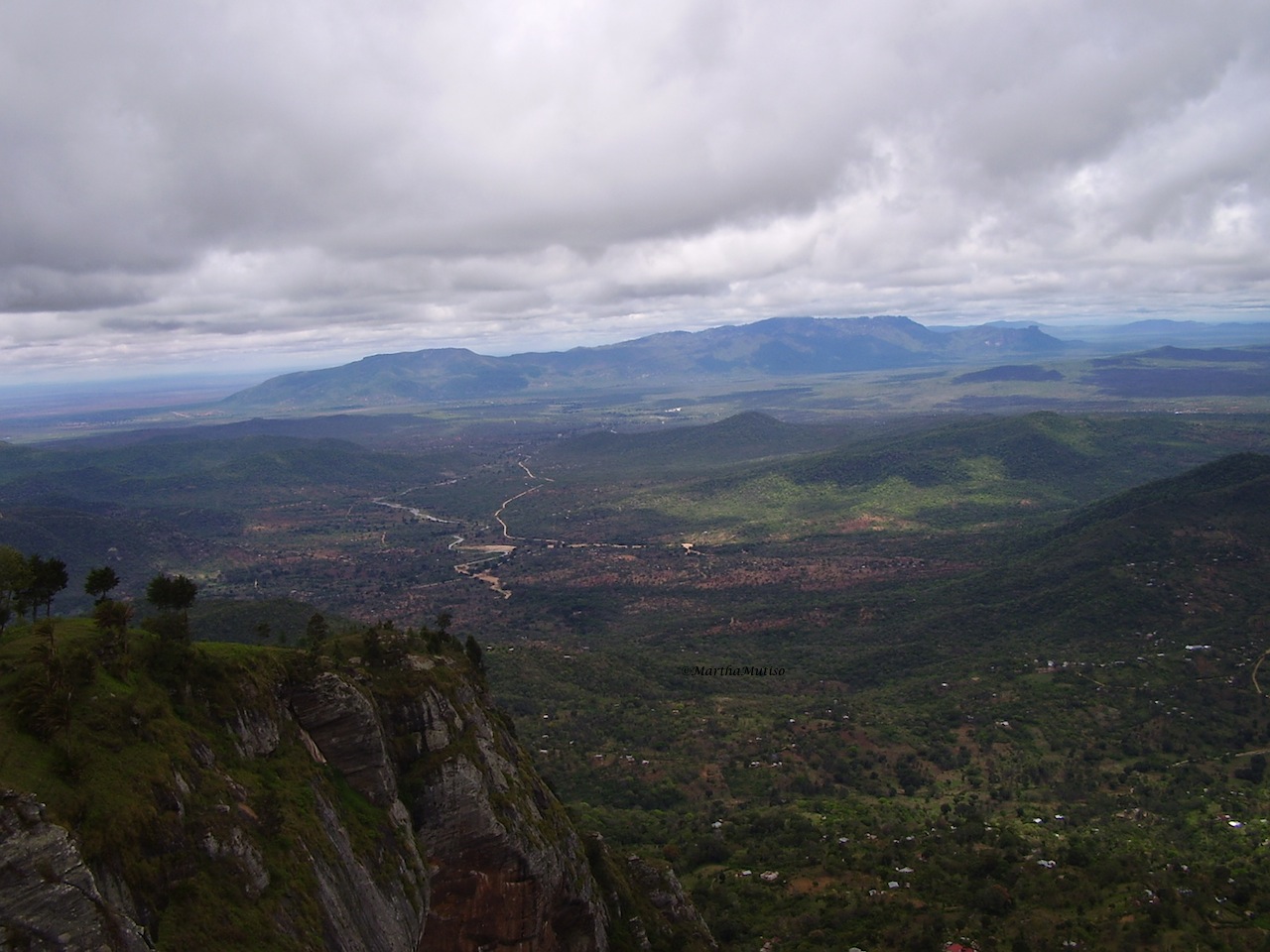
View of Taita environs from Mwachora Hill

We also get treated to a sporadic chance of visiting the Ngomenyi cave, which is one of the sacred sites of the Taita hills. The cave, like most other sacred caves around the area, is situated in a private farm. We also hike to Yale Hill, where, after maneuvering our way through thick bush, we come to an opening and the guide points out that it’s yet another sacred cave. Both caves are full of human skulls, which are a bit eerie, and are still unspoiled by the local community surrounding them.
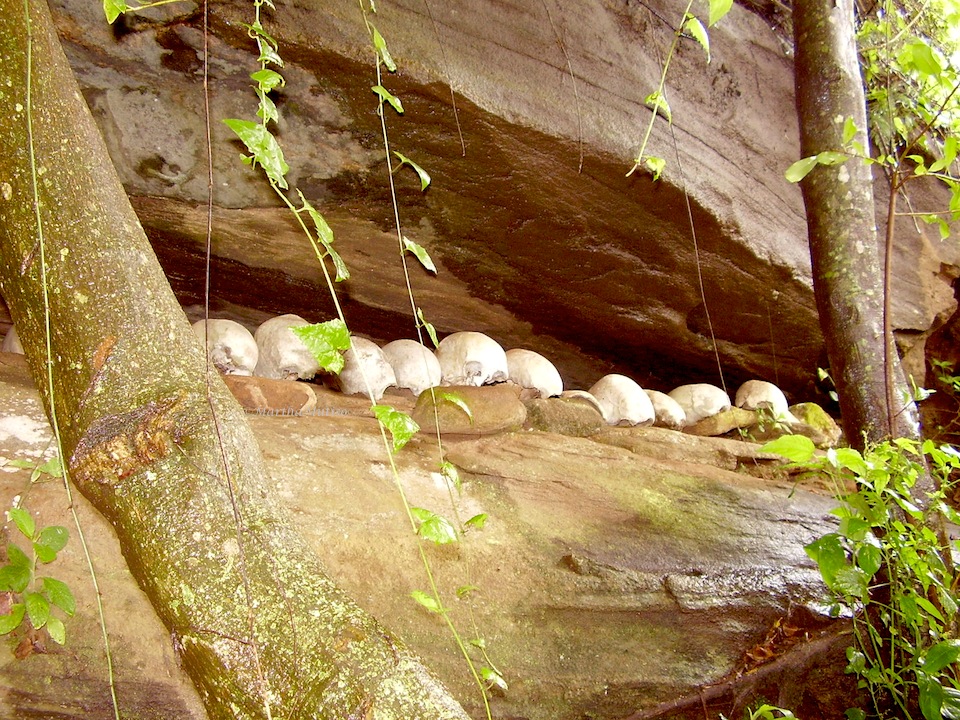
Ngomenyi Caves-Taita Hills

The guide highlighted that these caves were the dwelling place of their Higher Being, called Mulungu; the ancestors’ spirits were also called milungu. It was in these caves that sacrifices were conducted in cases of famines, epidemics, drought and sicknesses. Sacrifices in form of slaughtered goats were offered to the spirits of the dead. A council of elders conducted these sacrifices. Incase of domestic affairs sacrificial ceremonies were conducted by an elder of a home or a village and by a clan elder in charge of general clan affairs. Local brew, sheep and goats were offered. The sacrifices were meant to end disasters by appeasing the ancestors’ spirits and were offered in these caves, which are also considered as shrines.
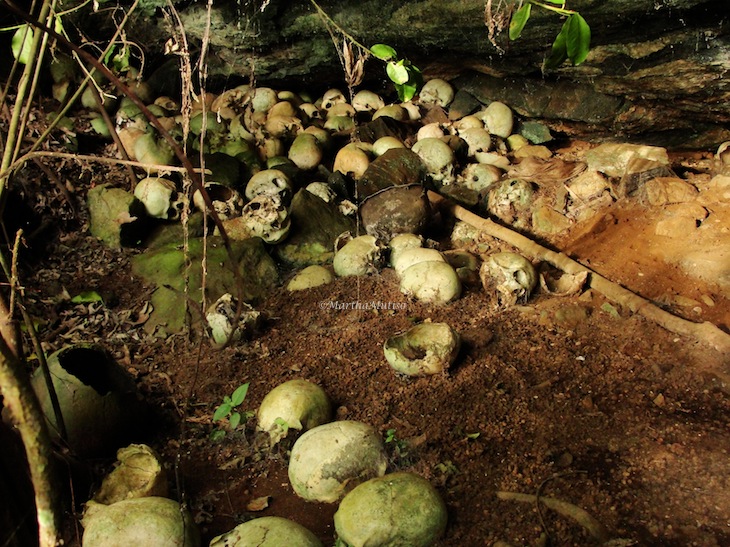
Yale Cave-Taita Hills

Asked about how the skulls got to the caves, our guide says that they were normally placed there after someone died. After burial they would wait until at least a month was over and then they would exhume the body and remove the head, which only belonged to an old person or a village hero and kept in the caves. They believed that the birth of an albino or child with any form of disability was a curse and was not allowed in the public; even after death, an albino or disabled person’s body would not be exhumed. This tradition however, has changed and people with disabilities are no longer considered as curse.
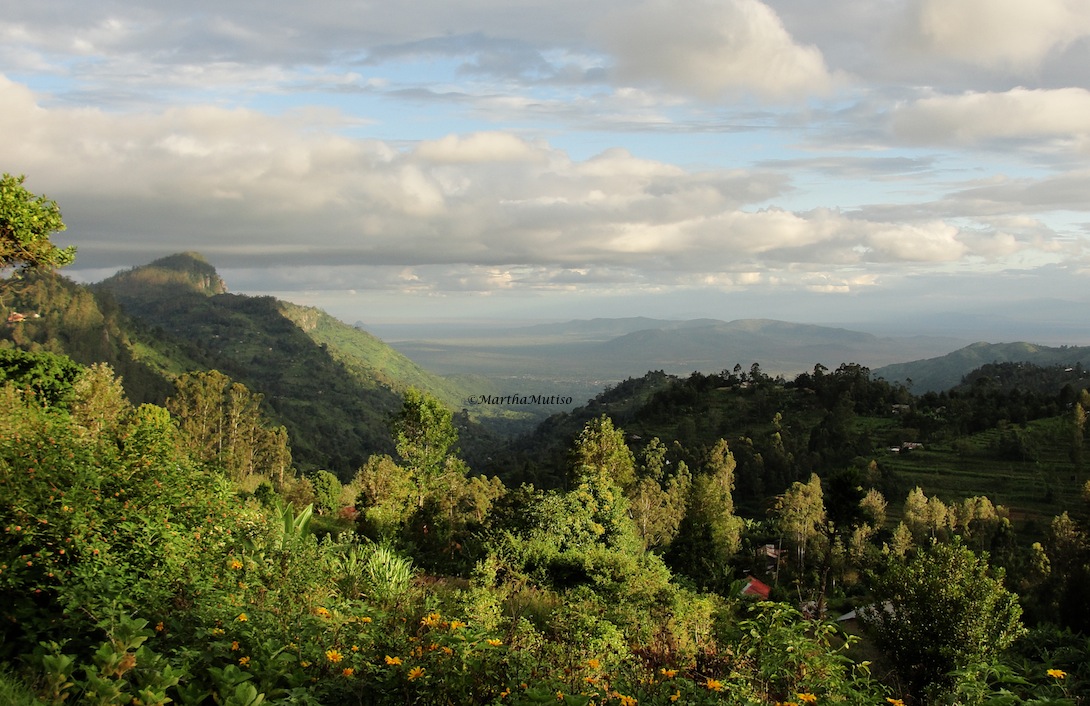
View from Yale Hill, Taita

These ancient traditions and taboos surrounding these sites have so far demanded respect for nature, or simply kept people away from these sites because nobody was supposed to cut trees or collect firewood from these “holy places”. This in turn has led to the conservation and preservation of the hills and indigenous knowledge. However, many of the sites are now under threat as the traditional practices and activities fade and pressures from natural calamities like landslides, development and tourism increase. Some of these caves are also threatened by direct destruction by people, a threat that the local guides are currently addressing through educational programmes to schools on the importance of such sites in the area.

The Splendid Crow, one dive at a time

Bold, noisy, abundant and almost totally unafraid of people is the best way to describe the Indian House Crow, Corvus splendens, an exotic bird, which has become a major problem in cities along the East Coast of Africa. This crow has become widespread by introduction around the Indian Ocean and the East African Coast.

As an avian intruder, the Indian House Crow has been given the scientific name Corvus splendens: the ‘Splendid Crow’ is ironically undesirable for a number of reasons. It is an aggressive and opportunistic forager; it feeds largely on human scraps, small reptiles and other animals such as insects and other small invertebrates, eggs, nestlings, grain and fruits. Most food is taken from the ground, but also from trees as opportunity arises. It is a highly opportunistic bird and given its omnivorous diet, it can survive on nearly anything that is edible.

It has a devastating impact on indigenous bird populations by eating eggs and mobbing other birds that might compete with it or just for the sheer fun of it. Indian House Crows have also been blamed for causing power cuts in some areas, as they often construct nests on electric poles. They are now found in every East African coastal city, often scrabbling in large flocks through piles of garbage at the sides of roads.

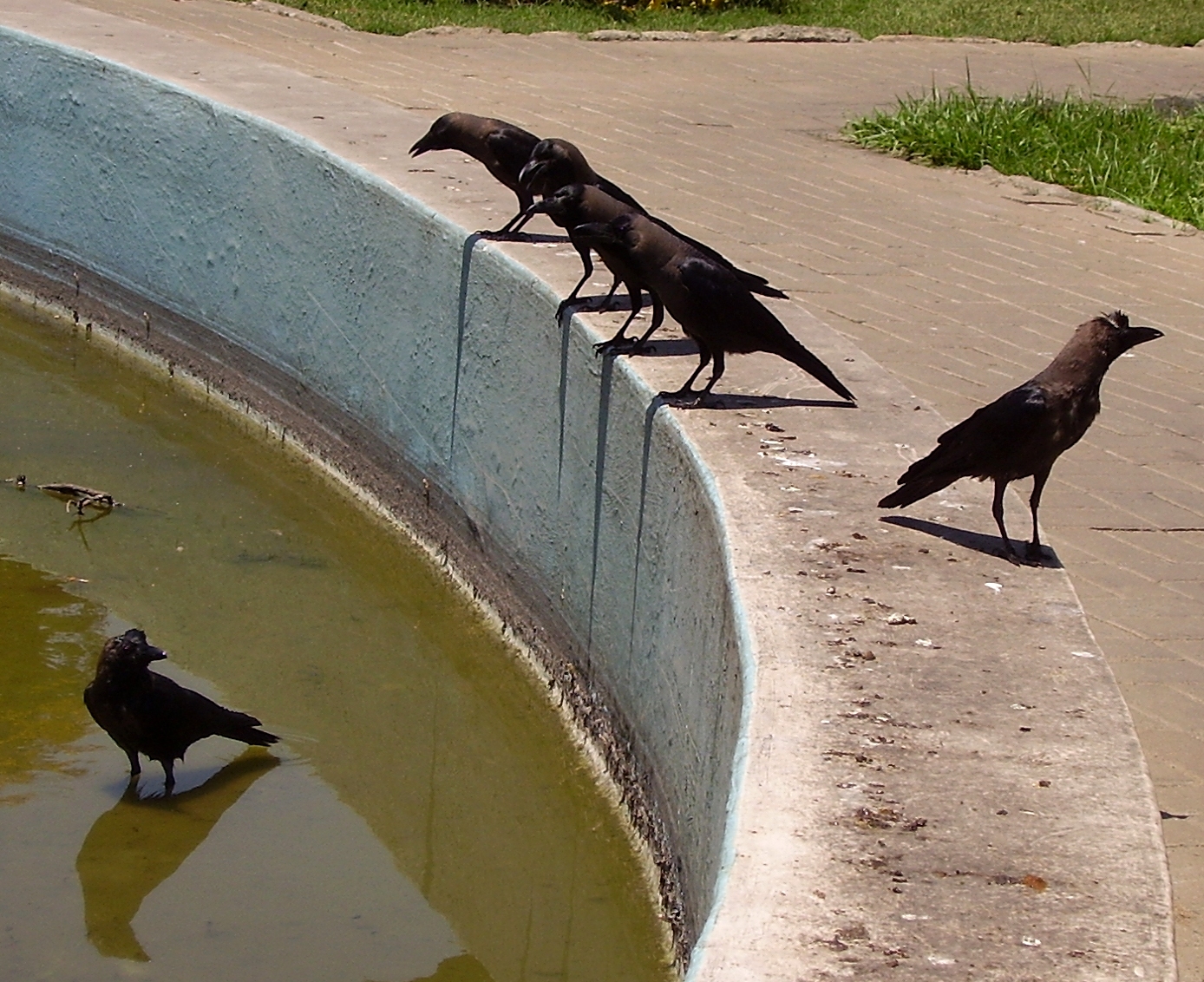
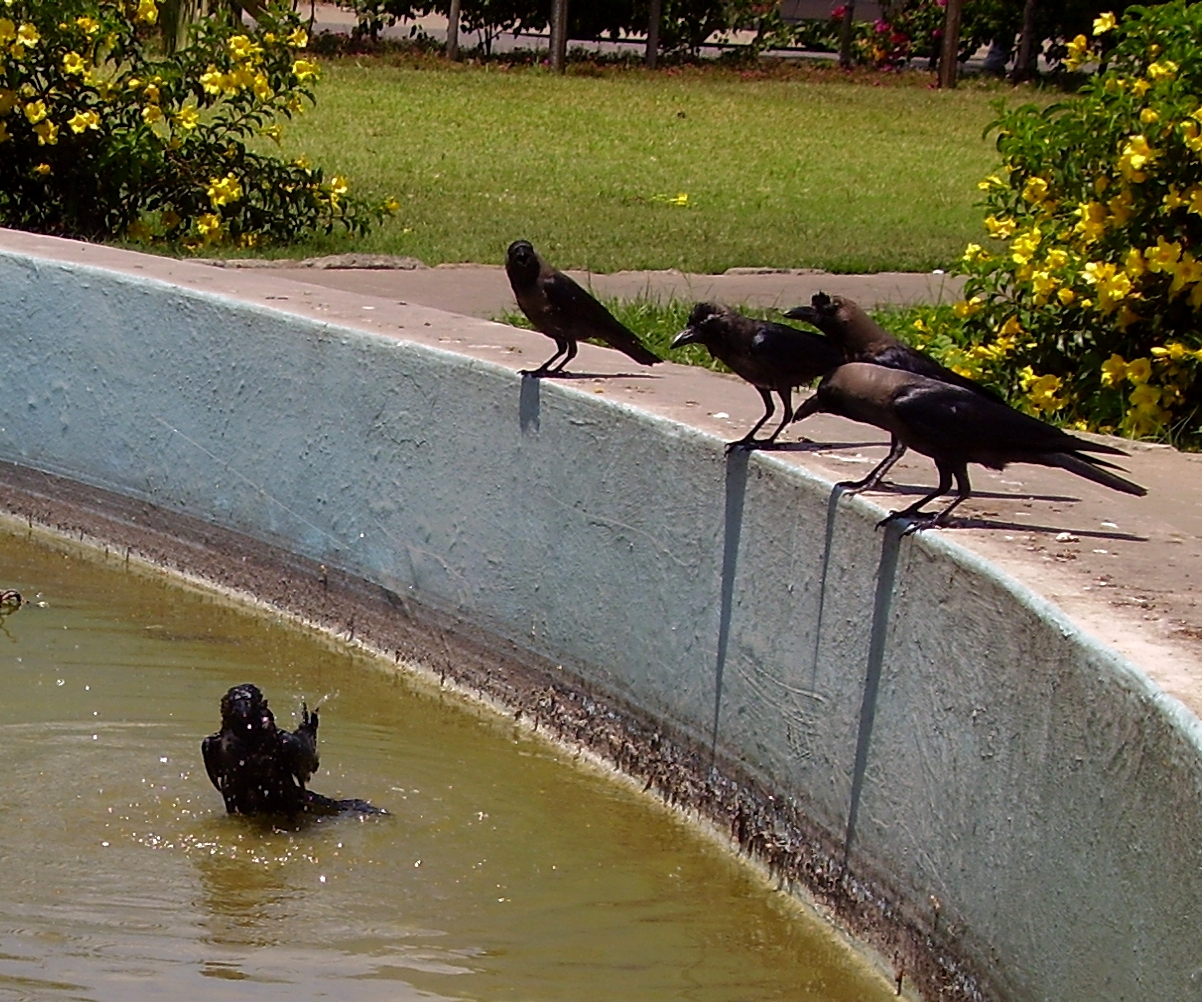
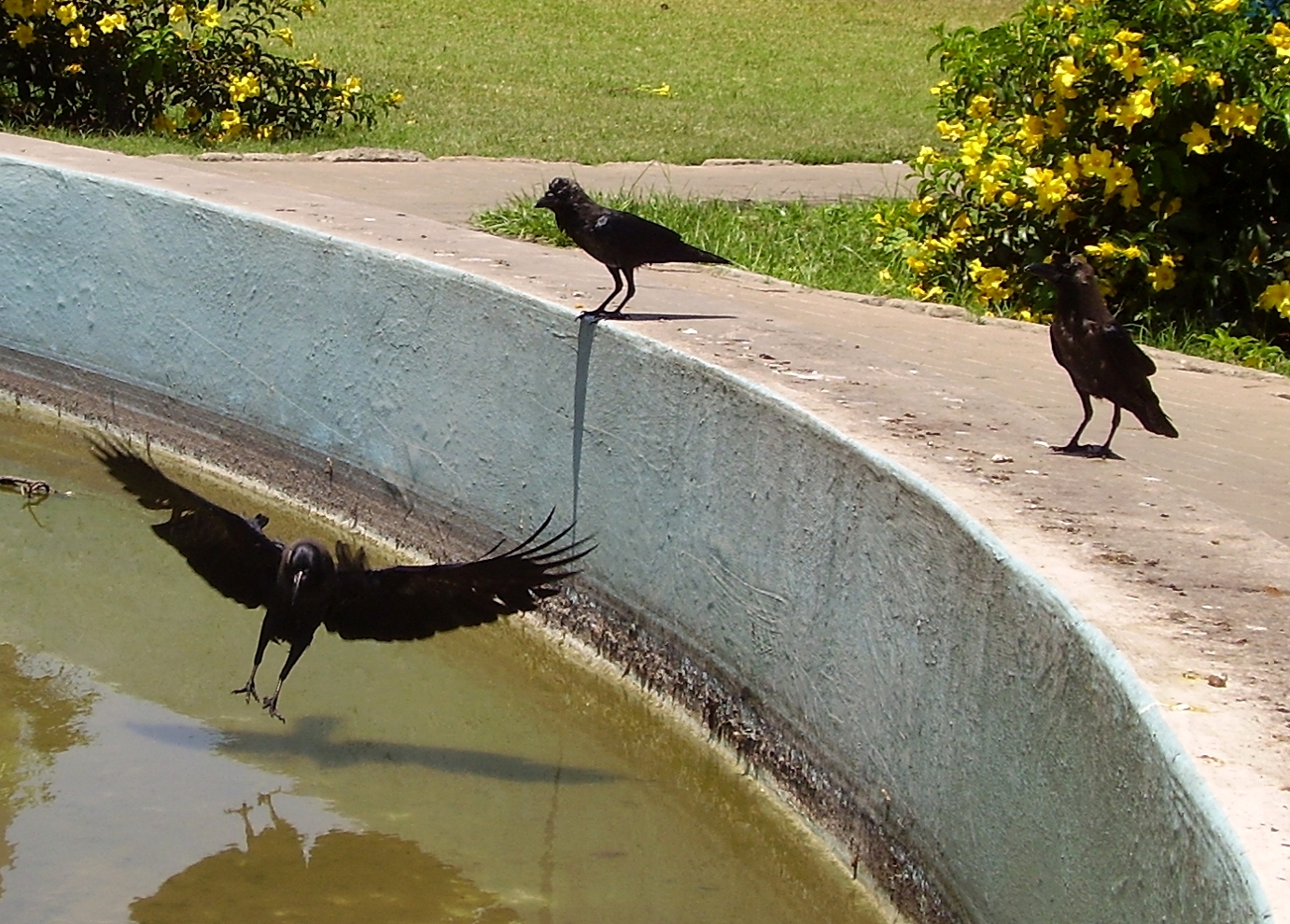
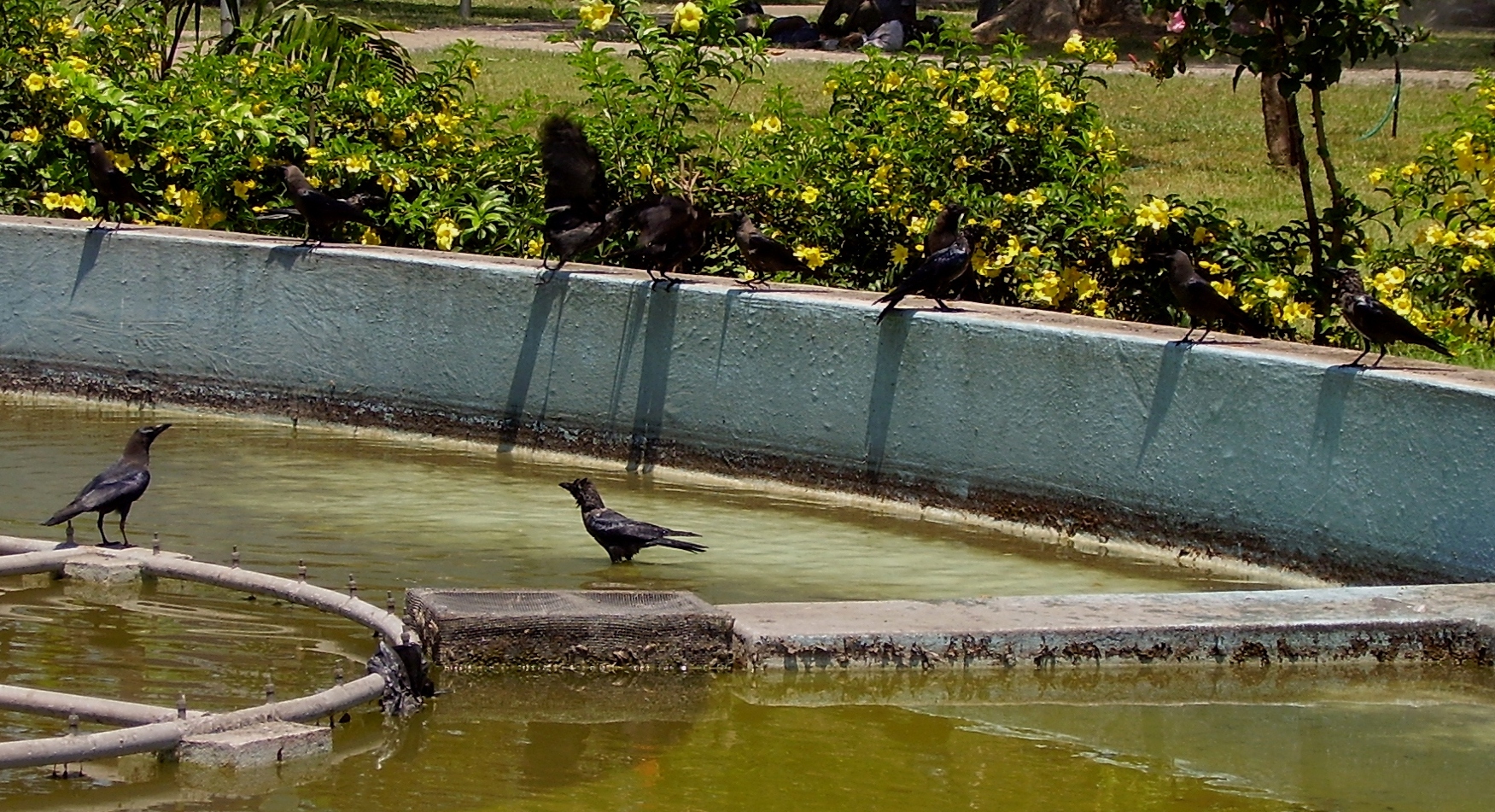
However, it might not be the same case with this flock of Indian House Crows at a water fountain opposite the Mombasa Railway Station. At mid day, with the heat of the sun at a higher degree, they would fly out in flock, circle around the water fountain and the garden and after five minutes they would, totally undisturbed by the passers by, dive in for a bath. This bath, done in turns, would last about two minutes and the next crow in line would dive in the water for the same period of time. This is unlike the Indian House Crow which is always associated with garbage sites and poor sanitation.

Indian House crows at the water fountain
The crows decide who goes first
They look on as they each wait for their turn
It's his turn
It’s his turn

“The Buffalo Rhino”

During a game drive in Nairobi National Park our group was very excited to spot the first Rhino of the day. The Nairobi National Park is one of the safest haven for both Black Rhinos (Diceros bicornis) and White Rhinos (Ceratotherium simum). The two species can be differentiated by their physical appearance, eating habits and social behavior. The White Rhinos are square-lipped, social and grazers; the Black Rhinos are hook-lipped, solitary and browsers.

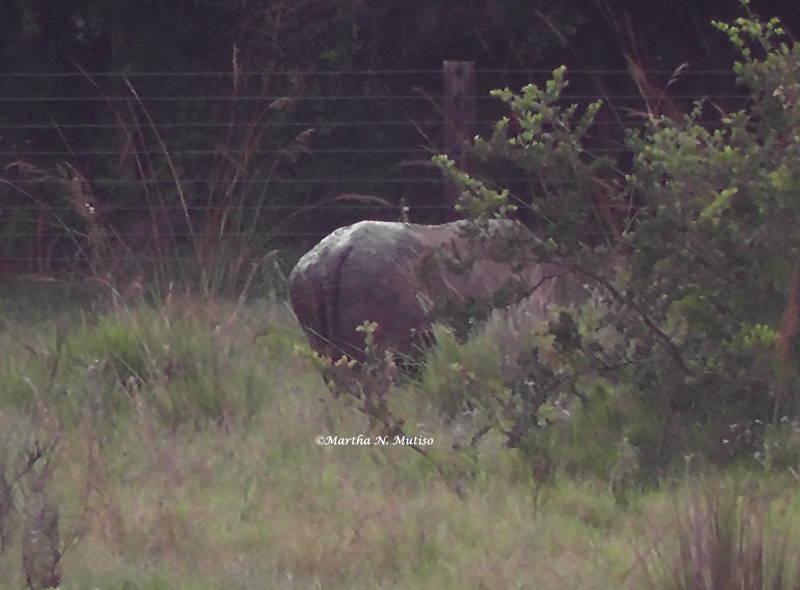
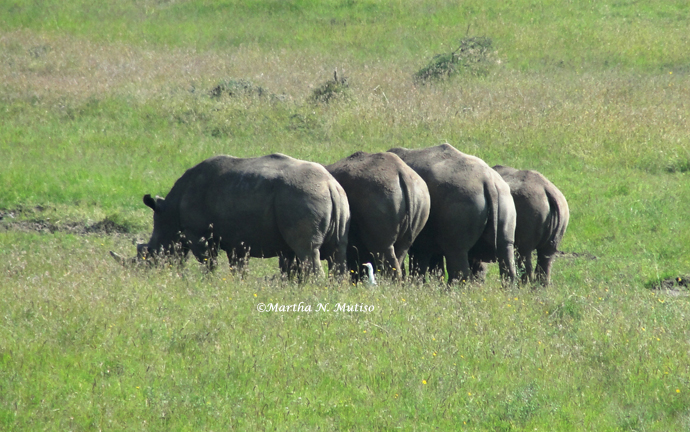
“Our Rhino” was very far and we all had turns using the binoculars to get a closer look at it. What we couldn’t tell was if it was Black Rhino or White Rhino, we could only see the rump.

The "rear" view
The “rear” view

Well, our group was a patient bunch and didn’t mind waiting for the Rhino to lift up its head. It didn’t take very long; it lifted its head to look at us. It was my turn to look the binoculars, and I could see its head very well. The head didn’t look like it belonged to a Rhino and the horns weren’t where they are supposed to be…

I don't look like a Rhino, do I?
I don’t look like a Rhino, do I?

It was humorously disappointing, but had a good laugh about our “special Rhino”, which turned out to be a Cape Buffalo. And every day after that, we all laughed and still do laugh at our Buffalo Rhino!!

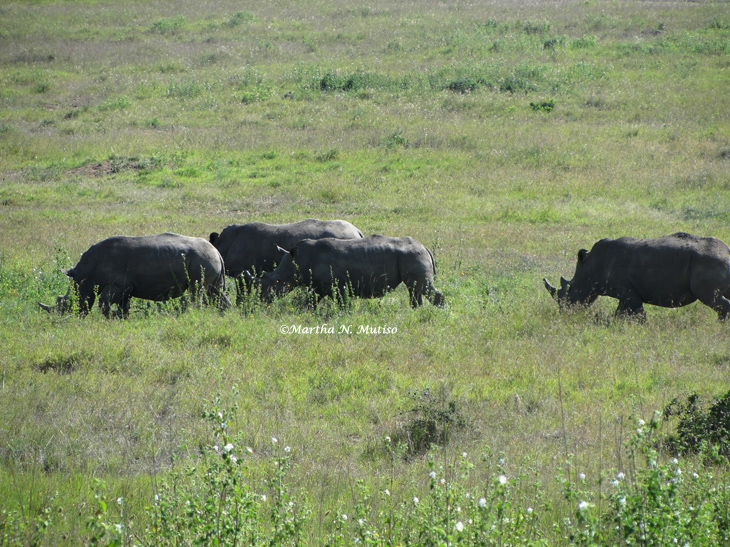
The excitement didn’t go to waste. Before we could call it a day at the Park, we were rewarded by our first sighting of not one but four Rhinos of the day, the White Rhinos. And this time round, we could clearly identify that they were Rhino Rhinos!

The White Rhinos (Ceratotherium simum)

We drove back to our camp, and reflected on how the rhino’s population is currently in decline due to poaching, habitat loss and illegal horn trade. We silently hoped that the species would survive long enough for future generations to marvel at their gracefulness and beauty.

We are where we belong, this planet is our home.

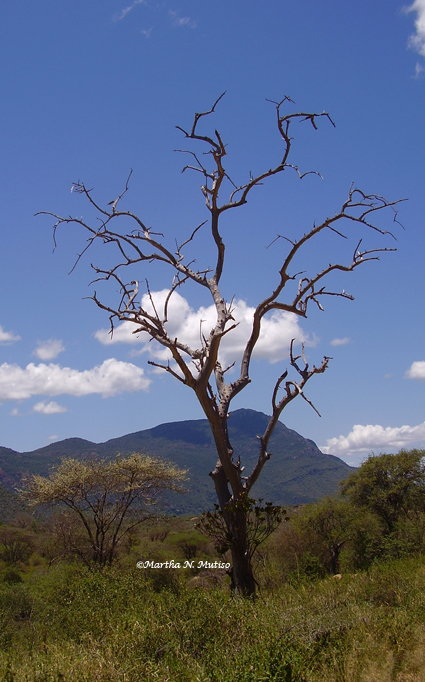
Look at that gorgeous dead tree!

Often times we look at dead trees and frown. I had a different reaction recently when my friend Elaine echoed my thoughts after passing a very dead dry tree during a game drive in Maasai Mara. Shelley, Elaine’s daughter, was quick to assure me that I would get this reaction for the rest of the trip. Dave, Elaine’s son-in-law, also made sure to let me know that Elaine would stop and photograph all the beauty along the way. As anyone would expect any foreigner’s reaction to a lion, cheetah or leopard sighting, it was refreshing to listen to oohs and aahs of a dead tree sighting. And for once during my outdoor activities, I knew I was bound to have the greatest time of my life with this lovely crew.

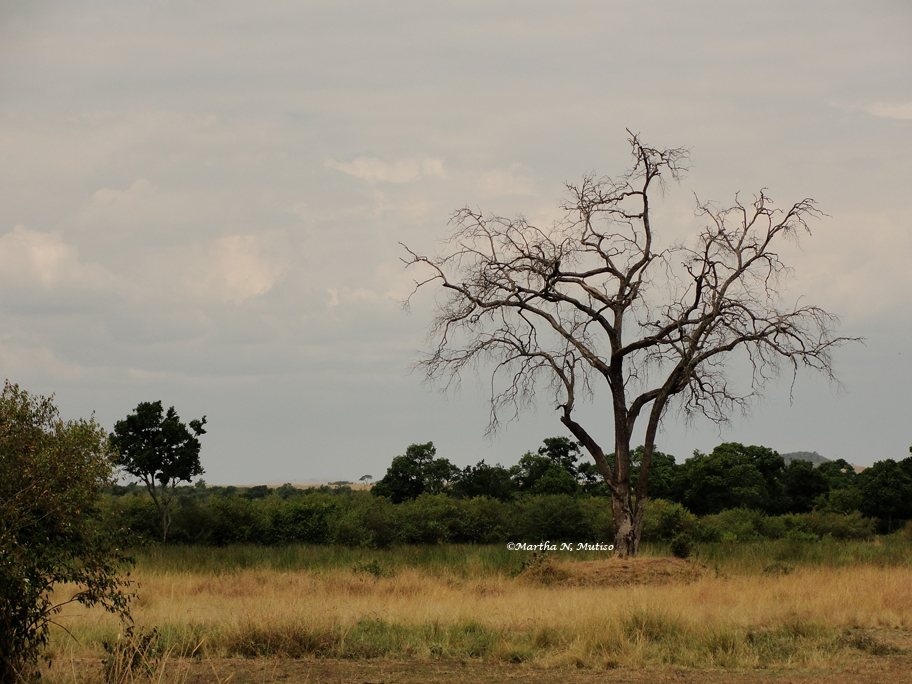
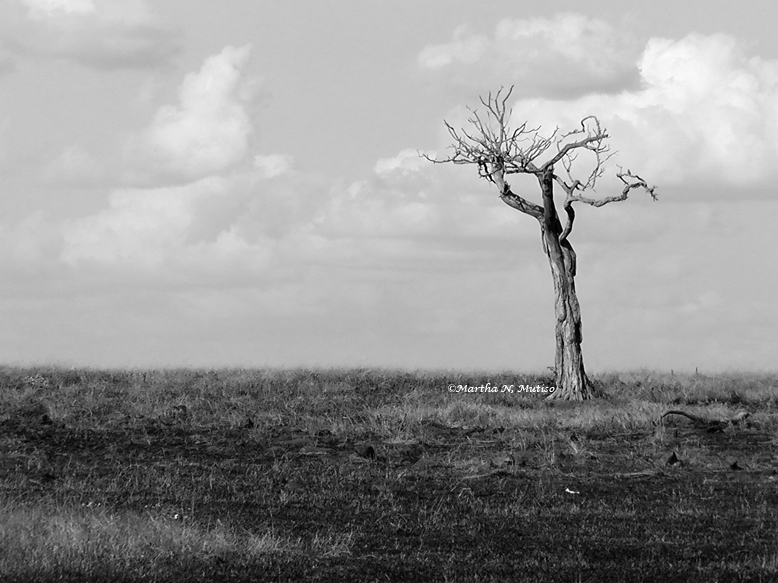
We came across many of these beautiful skeletons

Back to the dead trees, they often stand out in far away landscapes and decorate them in the most awe striking beauty I have ever witnessed. The importance of dead trees in the ecosystem has rarely received the consideration that it deserves. It has been found out that the removal of dead wood and dead trees may seriously affect the long-term availability and viability of habitat and diversity. It may also threaten primates, reptiles, insects and birds, which depend on dead wood and forest litter for their survival.

A gorgeous dead tree in Maasai Mara landscape

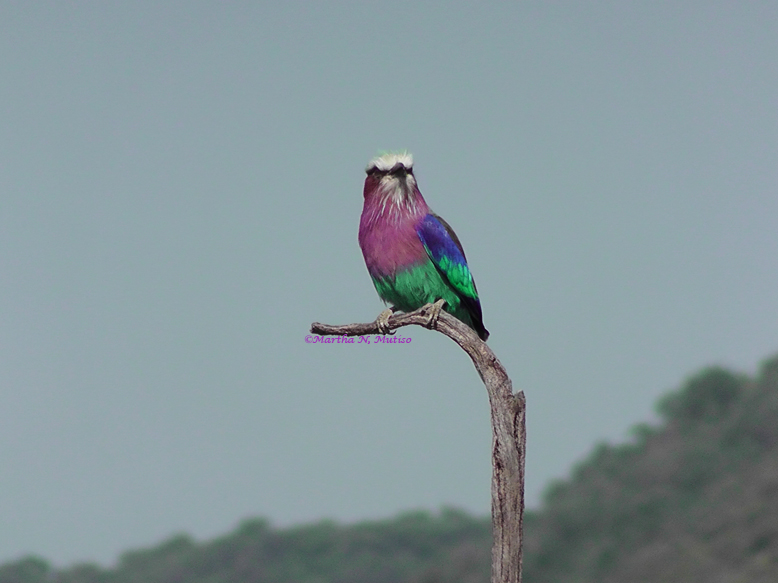
A Lilac Breasted Roller perched on a dead tree branch

My appreciation for gorgeous dead trees and other nature’s beauty was renewed during this trip. Like Elaine says, continue to enjoy dead tree skeletons as much as you can; they are the mirror of their past and each has a story to tell.

If i had a bumper sticker it would read “I love gorgeous dead trees”

Birding at Ahero Rice Scheme, Kisumu

In January I joined Lake Victoria Sunset Birders for their waterfowl census in Kisumu. Due to limited funds, we only visited one site-the Ahero Rice Scheme, which was just as great. The Rice Scheme is managed by the National Irrigation Board and has provided Kisumu residents with employment, income and food security.

The Rice scheme, which is normally filled with water, was dry but it had variety of interesting waterfowl…and non-waterfowl…and non-avifauna!! We recorded Sandpipers, Storks, Ibises, Ducks, Herons, Egrets, Geese, and Hamerkops… and as usual, I managed to get some few photos that am proud of 😉

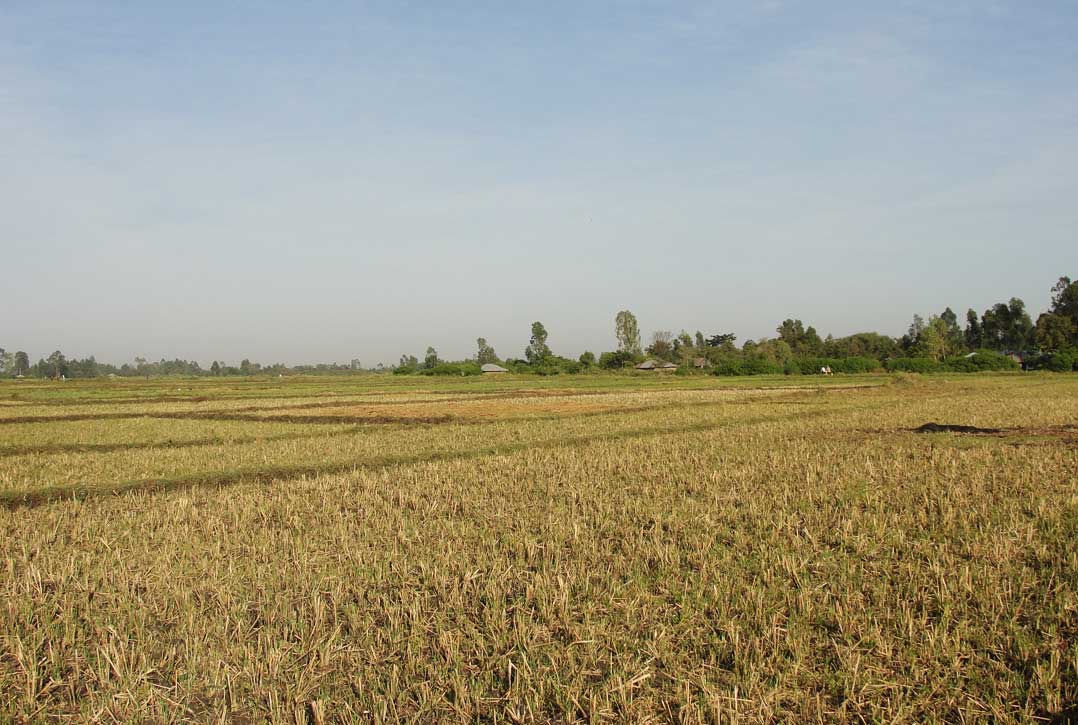
The Ahero Rice Scheme fields

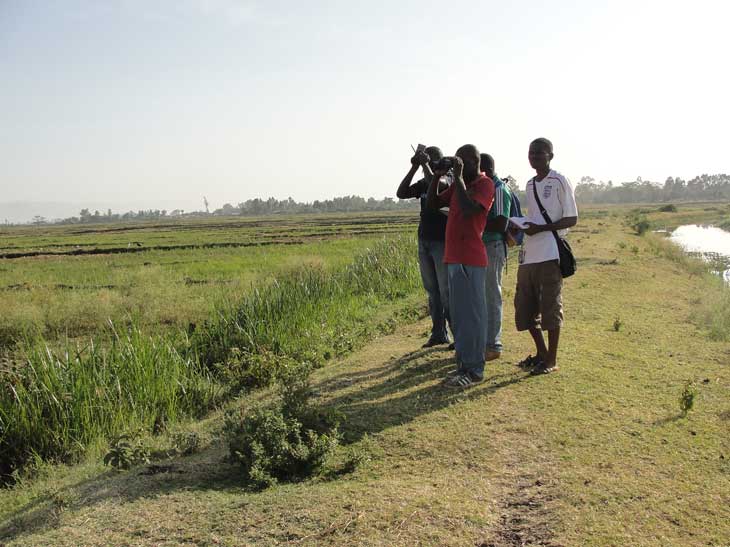
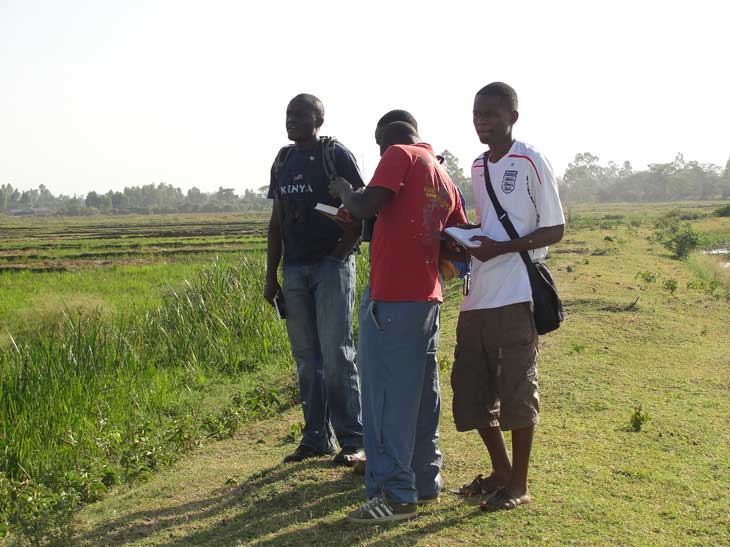
My group members scanning the fields

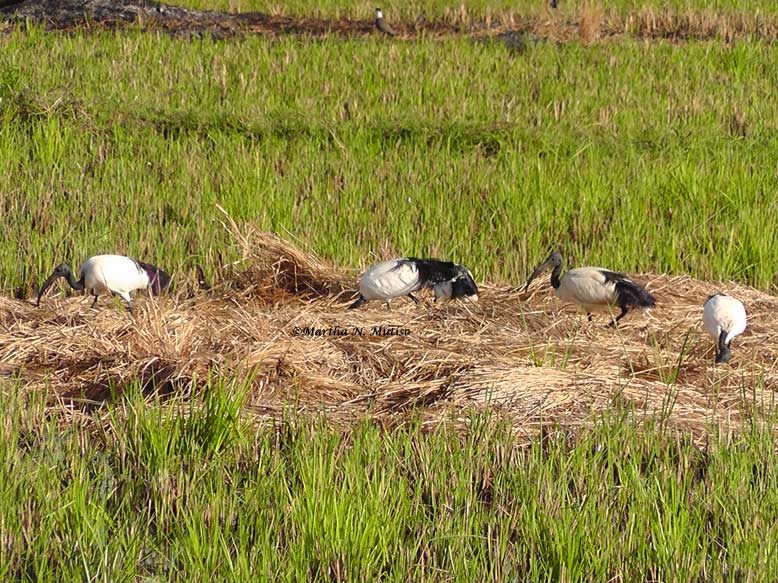
Sacred Ibis feeding on rice in the fields

The Open Billed Storks were special for me

When in doubt, a field guide book is always handy for consultation

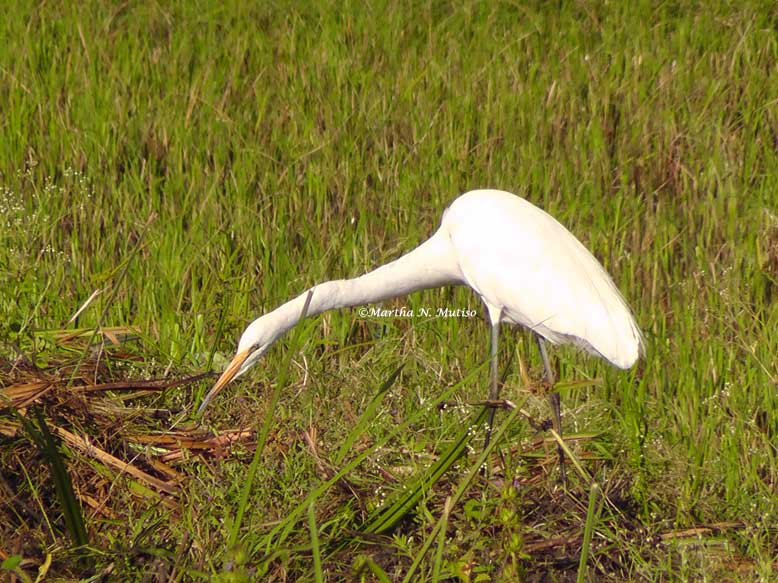
A Great Egret looking for worms in the soggy fields

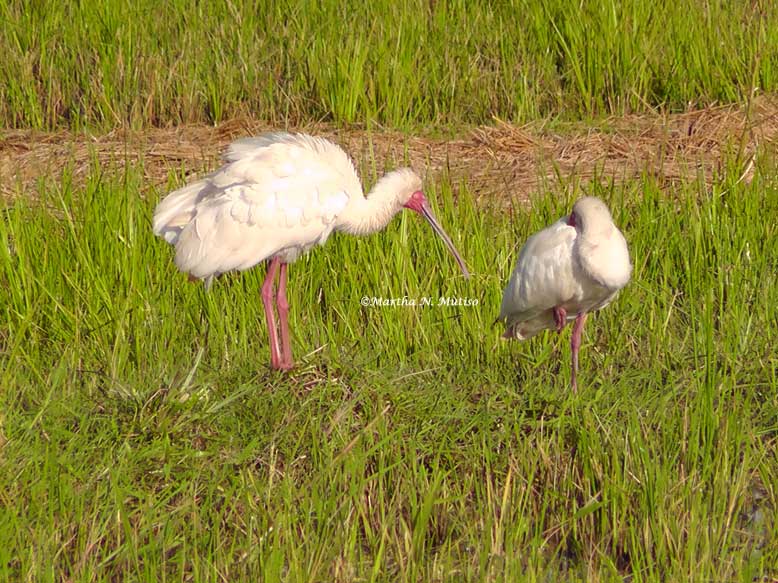
African Spoonbills

The Southern Red Bishops were stunning in their breeding plumages

The Jackson’s Forest Lizard spotted during a detour away from the fields

My awesome and fun birding buddies, The Lake Victoria Sunset Birders 🙂

Greening Kereita Forest

After the recently launched International Day of Forests, the tree planting campaigns and activities have intensified. It was a great day for greening the Kereita forest, which is one of the Important Biodiversity Areas in Kenya. The tree planting exercise was led by the Kijabe Environment Volunteers in collaboration with the Rotaract Club of Nairobi Central members and more than 2000 indigenous trees planted.

This slideshow requires JavaScript.