Kanga stories

The cloth that reveals…

The Kanga is a piece of brightly coloured printed cloth worn by women and some men. Widely used in Kenya and Tanzania, the kanga is also found in many African countries especially in the Indian Ocean Region.

The Nairobi Gallery Museum saw the launch of the Kanga exhibition, which was accompanied by music, food, refreshments, speeches and an exciting fashion show. Until then, I hadn’t realized just how many Kanga designs there are out there, and of course, trust Kenyans to bring out the best in everything. There are plans to put a trademark on the Kanga, something that Kenya should have done many years ago. If it’s not done, we may lose it, like we lost the ownership of the Kiondo.

A funny story of the kanga is that the name “Kanga” is said to have originated from the Swahili word for the Guineafowl. This is due to the fact that many of the initial kanga cloths had patterns consisting of dots. It’s said that swahili men may also have named the kanga after the Guineafowl because they felt that the women who preferred to use them chattered like Guineafowl…

This slideshow requires JavaScript.

Greening Kereita Forest

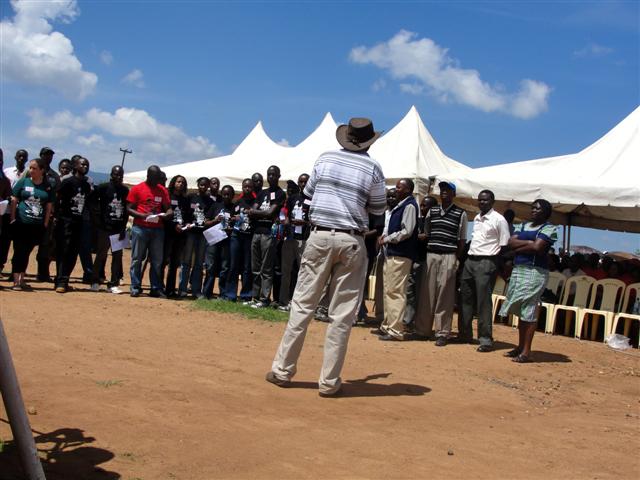
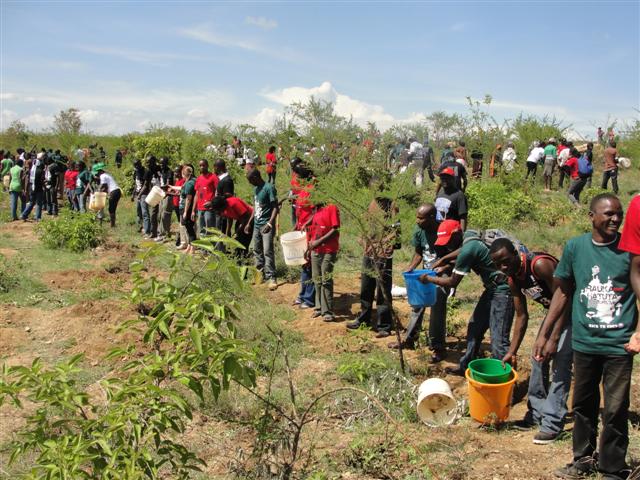
After the recently launched International Day of Forests, the tree planting campaigns and activities have intensified. It was a great day for greening the Kereita forest, which is one of the Important Biodiversity Areas in Kenya. The tree planting exercise was led by the Kijabe Environment Volunteers in collaboration with the Rotaract Club of Nairobi Central members and more than 2000 indigenous trees planted.
This slideshow requires JavaScript.

Letter from the President-The Goi Peace Foundation

I received this letter from the President of the Goi Peace Foundation. The Goi Peace foundation is an NGO dedicated to promoting world peace, transcending all boundaries of race, religion, or politics, with a belief that peace begins in the mind of each individual. The letter read;

Dear Martha,

Two weeks have elapsed since the devastating earthquake and tsunami struck the Northeast region of Japan. It is the most powerful natural disaster in Japanese history, and its aftermath has been enormous.

On behalf of the Goi Peace Foundation, I would like to express my sincere sympathy and condolences to the victims of the disaster in the afflicted areas, and to our international friends, I would like to thank you for the many prayers and thoughts extended to the Japanese people. We are continuing to receive many messages from our partners and supporters from all over the world expressing their solidarity and offering their support at this time of need. It has been a great encouragement for us and all our members throughout Japan.

We at the Goi Peace Foundation are committed to doing our utmost to find ways forward out of this crisis, so that all those lives will not have been lost in vain, and so that people who have been afflicted will be able to stand up again with new hope for the future. We are envisioning that the restoration that will take place will not only be a restoration of what was there before, but a creation of a model of a new civilization. To this end, we are planning to cooperate with people of wisdom and vision from around the world. We will keep you posted of our plans, and we hope you will support our efforts in any way you can.

May Peace Prevail on Earth

Hiroo Saionji
President
The Goi Peace Foundation

Here, we would like to share some positive stories picked up from various sources, which represent the spirit of the Japanese people demonstrated after the disaster:

– Someone overseas called me on my cell. She said she wanted to connect to anyone who is in Japan, and so she called the country code and their own mobile number, which happened to be the same as mine. I didn’t fully understand everything she said, because it was English, but I knew enough to know that she really wanted to support the Japanese people. It really gave me so much hope.

– Last night when I was walking home (since all traffic had stopped), I saw an old lady at a bakery shop. It was totally past their closing time, but she was giving out free bread. Even at times like this, people were trying to find what they can do and it made my heart warm.

– In the supermarket, where items of all the shelves fell, people were picking up things so neatly together, and then quietly stand in line to buy food. Instead of creating panic and buying as much as needed, they bought as little as they needed. I was proud to be a Japanese.

– When I was walking home, for 4 hours, there was a lady holding a sign that said, “Please use our toilet.” They were opening their house for people to go to the restroom. It was hard not to tear up, when I saw the warmth of people.

– At Disneyland, they were giving out candies. High school girls were taking so many so I was thinking, “What???” But then the next minute, they ran to the children in the evacuation place and handed it to them. That was a sweet gesture.

– My co-worker wanted to help somehow, even if it was just to one person. So he wrote a sign: “If you’re okay with motor cycle, I will drive you to your house.” He stood in the cold with that sign. And then I saw him take one gentleman home, all the way to Tokorozawa! I was so moved. I felt like I wanted to help others too.

– A high school boy was saved because he climbed up on top of the roof of a department store during the flood. The flood came so suddenly, that he just saw people below him, trying to frantically climb up the roof and being taken by the flood. To help others, he kept filming them so their loved ones could see. He still hasn’t been able to reach his own parents but he says, “Its nobody’s fault. There is no one to blame. We have to stay strong.”

– There is a lack of gas now and many gasoline stations are either closed or have very long lines. I got worried, since I was behind 15 cars. Finally, when it was my turn, the man smiled and said, “Because of this situation, we are only giving $30 worth gas per each person. Is that alright?” “Of course its alright. I’m just glad that we are all able to share,” I said. His smile gave me so much relief.

– I saw a little boy thanking a public transit employee, saying, “Thank you so much for trying hard to run the train last night.” It brought tears to the employee’s eyes, and mine.

– A foreign friend told me that she was shocked to see a looong queue form so neatly behind one public phone. Everyone waited so patiently to use the phone even though everyone must have been so eager to call their families.

– The traffic was horrible!! Only one car can move forward at green light. But everyone was driving so calmly. During the 10 hour drive (which would only take 30 minutes normally) the only horns I heard was a horn of thank you. It was a fearful time — but then again a time of warmth and it made me love Japan more.

– When I was waiting at the platform, so tired and exhausted, a homeless person came to us and gave us a cardboard to sit on. Even though we usually ignore them in our daily life, they were ready to serve us.

– A beverage company is giving out free drinks, phone companies are creating more wi-fi spots, 1,000,000 noodles were given by a food company, and everyone is trying to help the best way they can. We, too, have to stand up and do our best.
– Whenever there is a black out, people are working hard to fix it. Whenever the water stops, there are people working to fix that too. And when there is problem with nuclear energy, there are people trying to fix that too. It doesn’t just fix itself. While we are waiting to regain the heat in the cool temperature or have running water, there were people risking their life to fix it for us.

– An old woman said, on a train: “Blackouts are no problem for me. I am used to saving electricity for this country, and turning off lights. At least, this time we don’t have bombs flying over our heads. I’m willing to happy to shut off my electricity!” Everyone around couldn’t say a word in response.

– When I grow older, I am going to tell my children and grandchildren, “When your grandma was young, there was a big earthquake in Japan which brought the world to one. And everyone worked so hard to help support each other and everyone was shining. To be able to tell that story, I’m going to work hard in rebuilding that work.

– In one area, when the electricity returned, peopel rejoiced. And then someone yelled: “We got electricity because someone else probably conserved theirs! Thank you so much to EVERYONE who saved electricity for us. Thank you everyone!”

– In Korea, a Japanese man got a cab ride and when it was time to pay, the driver refused and said: “You are Japanese, yes?” Yes. “When you go back to Japan, please donate the fee.” Beyond nationality or politics, we are all the same.

– My 10-year-old son, with tears in his eyes, handed his piggy bank to me, saying: “I don’t care if I cant buy my comic books, I want to save japan!!”

– I told my parents, who are living at the evacuation center, to come to Chiba where I live. And they got mad at me. My Dad said, “There are people who sustained far more damage than us, and they are not leaving. We certainly can’t leave! I will come to your place when we finish reconstruction here. So you do what you can from where you are.”

– I saw a man at the evacuation center crying when people brought food to him. It was the first time in 3 days that the food was brought to their center. But his next words surprised me. “I am very grateful that we are provided with food. But, but, the city next to us they are not receiving any food at all. Please go to that center as well.”

– An old man at the evacuation shelter said, “What’s going to happen now?” And then a young high school boy sitting next to him said, “Don’t worry! When we grow up, we will promise to fix it back!” While saying this, he was rubbing the old man’s back. And when I was listening to that conversation, I felt hope. There is a bright future, on the other side of this crisis.

(compiled and translated by Yuka Saionji)

May peace forever prevail over the earth

Beauty of Mt. Kenya National Park

The Mount Kenya National Park boasts of diverse flora, fauna and breath-taking scenery. A recent mountaineering expedition to Mt. Kenya revealed some of its well-hidden and best-kept secrets.

Mt Kenya, which is one of the attraction in the park, is the highest mountain in Kenya and the second highest in Africa, after Mt Kilimanjaro and is located in central Kenya. It lies just south of the equator. The highest peaks of the mountain are Batian (5,199 metres (17,057 ft)), Nelion (5,188 metres (17,021 ft)) and Point Lenana (4,985 metres (16,355 ft)).

The flora and fauna in the park is like no other in the country. During our 5 day expedition we encountered insects like beetles, ladybugs, flies and the fierce safari ants decorated the paths; colourful birds catching insects and sipping nectar from flowers; and mammals like the striped mice, Rock Hyrax, which were larger than the rock hyraxes am used to and the mischievous Syke’s monkeys which played on the bamboo forests. We also came across tracks and signs that other wildlife left behind as they roamed the park. These included Elephant and buffalo dung. The landscapes were breath taking; the rivers, whose water remained ice-cold, flowed gracefully.

Below is a slideshow of some of the biodiversity and landscapes of the park.

This slideshow requires JavaScript.

CWY-KENVO alumni reunion…

January and February 2011

Canada World Youth (CWY) is a national non-governmental organization that designs and delivers international educational programs for young adults. It was founded in 1971 by the late Senator Jacques Hébert (1923-2007), who was profoundly dedicated to youth and to greater intercultural understanding.

Kijabe Environment Volunteers (KENVO) is a non-profit making community-based organization formed by members from the local community living adjacent to the globally important Kikuyu Escarpment forests in Central Province, Kenya.

Recently, both current and past participants of the CWY-KENVO exchange program in Kenya have been actively involved in general activities that have been organized by the various organizations. The world is truly a small place. We have all come from afar, both geographically and culturally but through CWY we are all connected by a unique web of networks in various fields.

I recently participated in the African waterfowl census that was organized by the National Museums of Kenya. The waterfowl census is a bi-annual waterbirds and wetlands monitoring project in Kenya that has been taking place for the last ten years. It’s a collaboration project between the National Museums of Kenya, Kenya Wildlife Service and Nature Kenya and is coordinated worldwide by the Wetlands International. The National coordinator for Kenya is the Ornithology Section of the National Museums of Kenya and t covers major lakes and other wetlands in Kenya. I got to interact with both past and current CWY participants from two different groups (CWY Ottawa-Kimende and CWY Winnipeg-Kagwe).

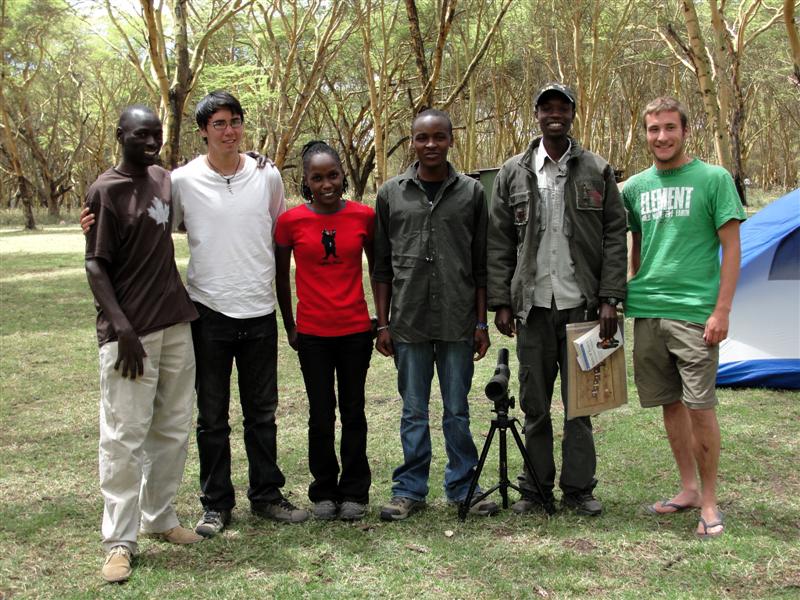
CWY-KENVO alumni at waterfowl census in Lake Naivasha, Kenya-Steve Kamau (2006-2007), Douglas Price (2010-2011), Martha Nzisa (2008-2009), Laban Kamande (2010-2011), Jack Kiiru (2010-2011) and Shane Bureau (2010-2011)

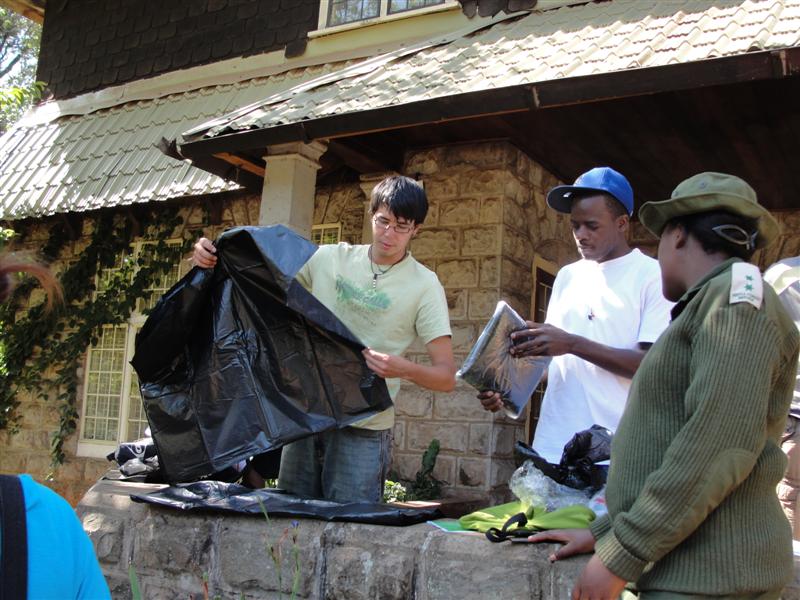
On 29th January,  the CWY-Kimende group joined us for an environmental cleanup at the Nairobi Arboretum. The activity was organized by the Friends of Nairobi Arboretum and the Rotaract Club of Nairobi Central. Other youth groups from universities and other conservation organizations around Nairobi also participated. The CWY participants’ presence made a lot of impact in the activity, and they got to interact with other young people from Nairobi.

Douglas (CWY-Kimende 2010-2011) distributing garbage bags to other cleanup participants

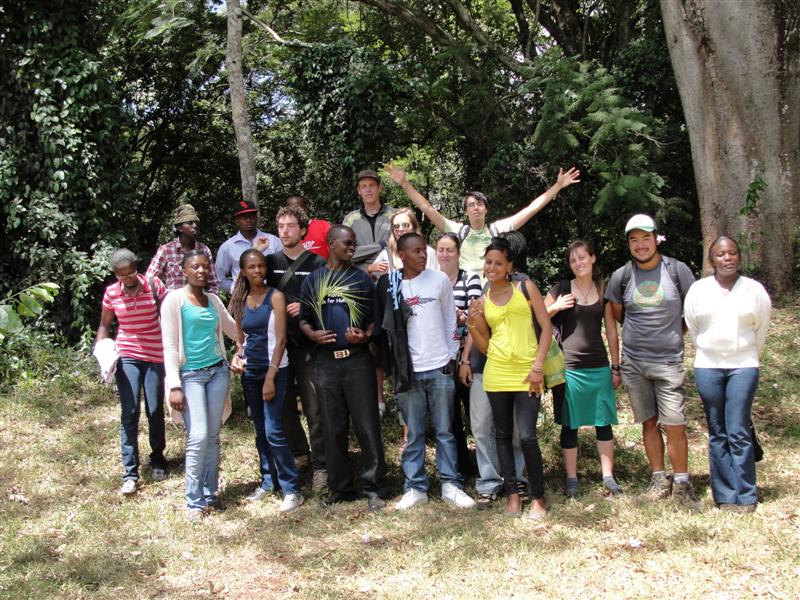
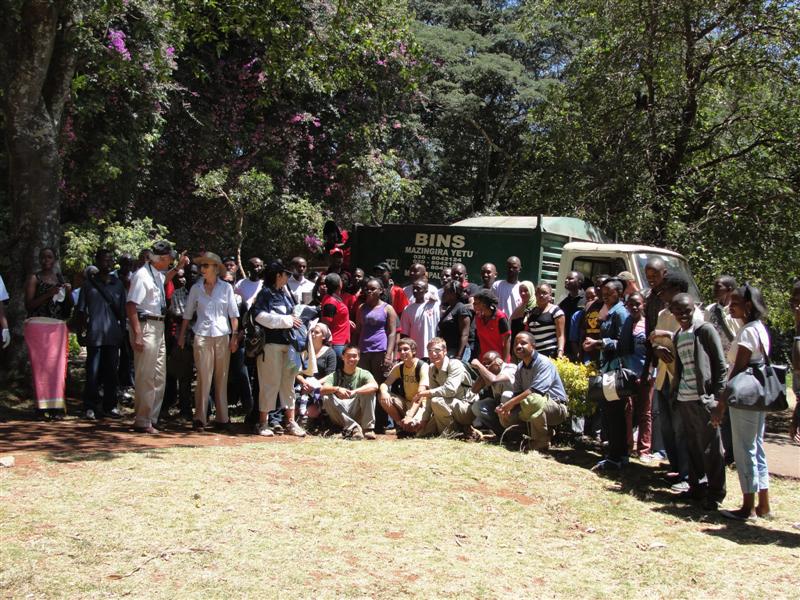
CWY-Kimende 2010-2011 participants after Nairobi Arboretum environmental cleanup in January 2011

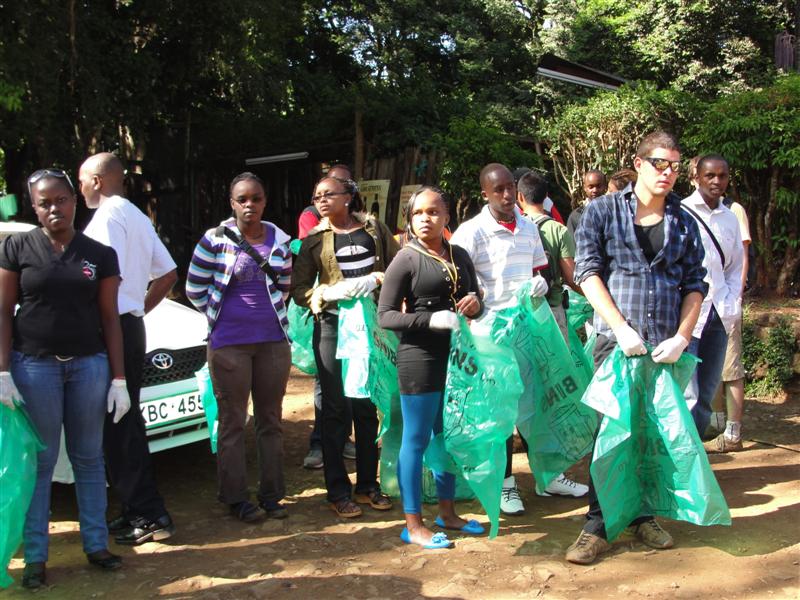
On 5th of February 2011, we had a similar activity, an environmental cleanup at the Nairobi City Park, which was organized by the Friends of Nairobi City Park. This time we hosted the CWY-Kagwe group and their enthusiasm and sense of volunteerism had a huge impact in the activity.

CWY-Kagwe 2010-2011 participants ready for Nairobi City Park cleanup in February 2011

A group photo of CWY-Kagwe 2010-2011 participants and other youth groups from around Nairobi-February 2011

The CWY exchange programs has made it possible for young people from all around the world to live and work in different communities in an active way, learning more about community, culture, conservation, wildlife and international development and gaining important professional skills for the future. I would like to thank the CWY-KENVO group coordinators and project supervisors for letting the groups take part and contribute in various activities in and away from their host communities.

Waterfowl Census at Lakes Elementaita, Oloidien and Naivasha

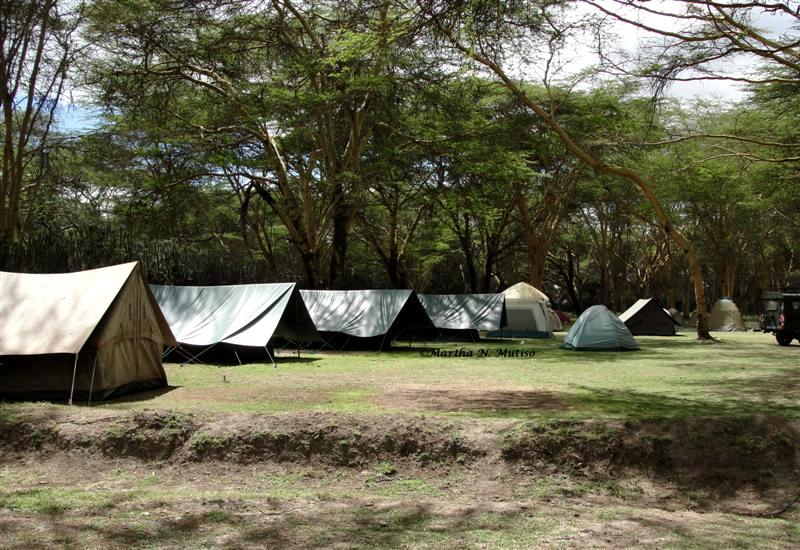
During the counts we set camp at the Kenya Wildlife Service Training Institute annex campsite. We had a larger group as we covered four lakes; Lake Elementaita, Lake Sonachi, Lake Oloidien and Lake Naivasha, which is the main lake.

The campsite

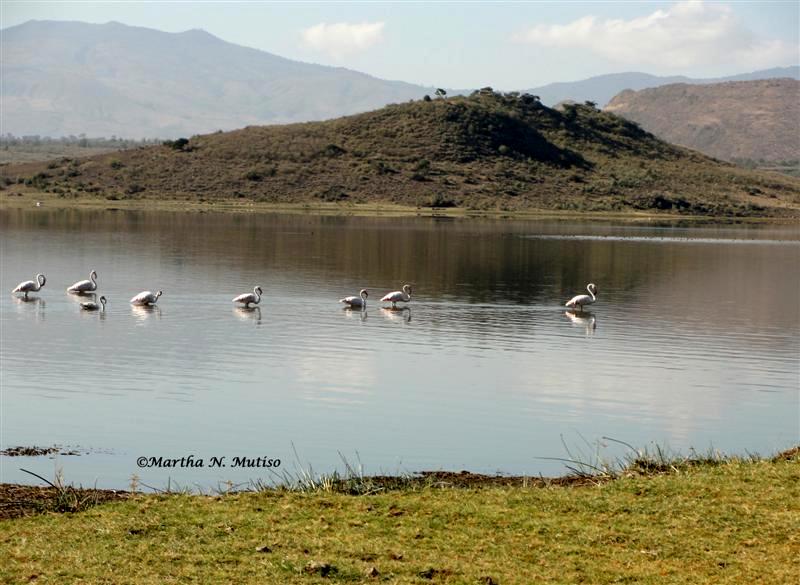
Lake Elementaita is a soda lake and the only breeding ground for the Great white Pelicans in Kenya and neighbouring countries. The lake attracts visiting flamingos, both the Greater and Lesser varieties, which feed on the lake’s crustaceans, insect larvae and on its suspended blue-green algae. Lake Elementaita is a Ramsar site and a Wetland of International importance.

Greater flamingos in Lake Elementaita

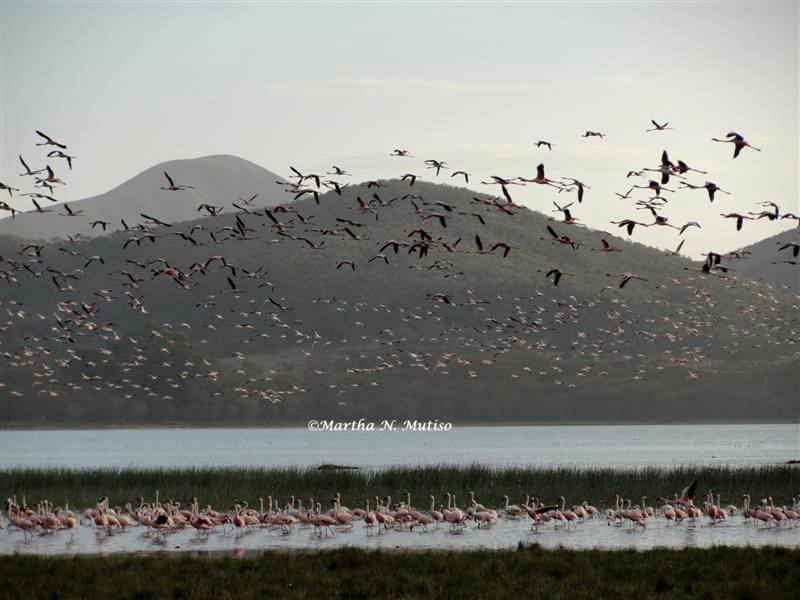
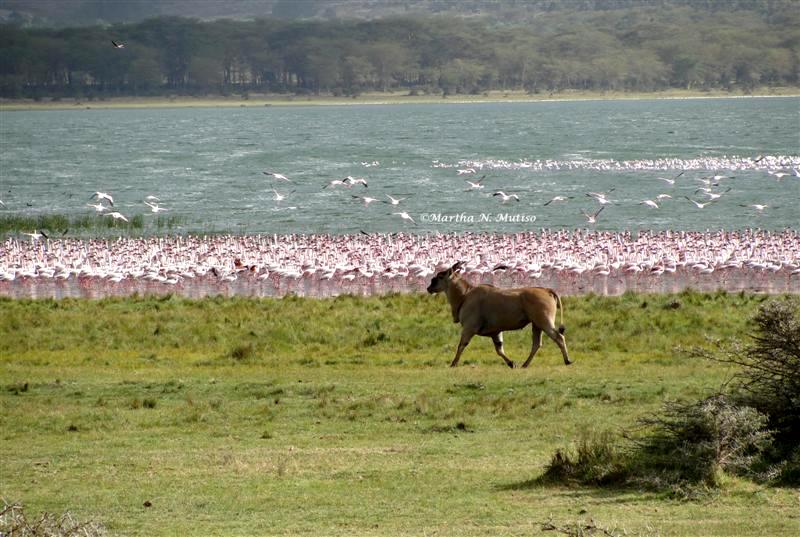
Lake Oloidien is a volcanic crater lake found at the south west corner of Lake Naivasha, home to Kenya’s largest flower farms. Oloidien, which used to be connected to Naivasha, has been going saline since its water levels fell and it became a separate lake in 1979. In 2006 it passed the salinity mark and began to produce bacteria called spirulina, a microscopic blue-green algae and the main food for Lesser Flamingos. The lake had thousands of flamingos, which have migrated from Lake Nakuru due to high toxicity levels in their natural home at Lake Nakuru.

Lesser Flamingos at Lake Oloidien

An Eland and Flamingos at lake Oloidien

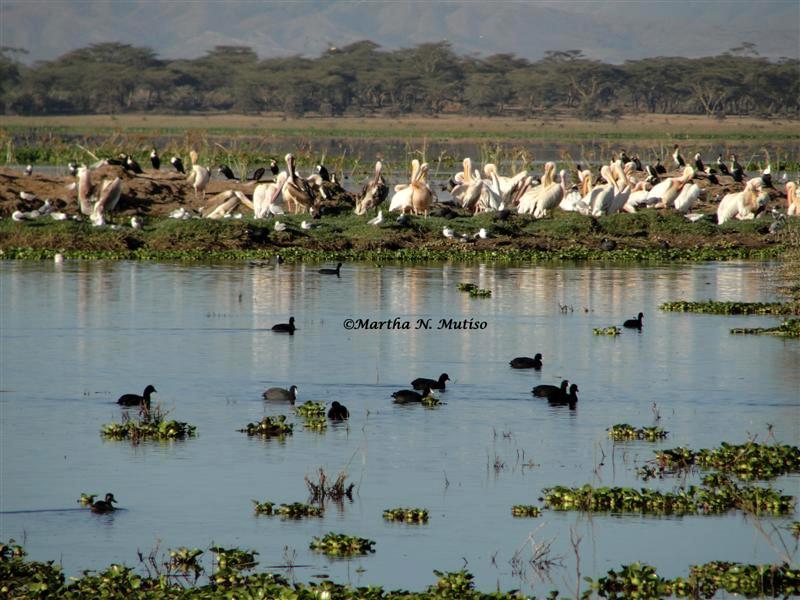
Lake Naivasha is a fresh water lake which was designated as a Ramsar site in 1995 and is managed by the local property owners under the Lake Naivasha Riparian Association formed in 1934. The lake provides diverse habitats for a variety of mammals, birds and fish. The lake didn’t have many flamingos, although the population of resident and migratory ducks and other waders was impressive.

Great White Pelicans, Cormorants, Coots and other waders at Lake Naivasha

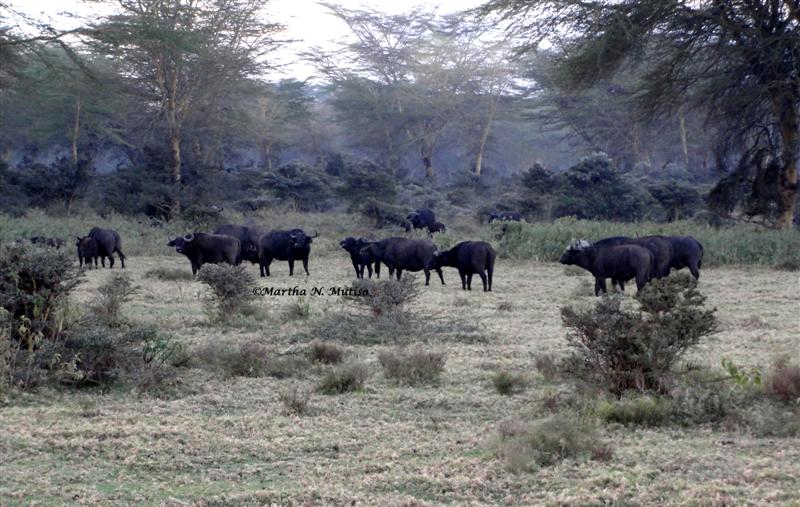
Buffaloes near the lake, they watched as we counted the birds..

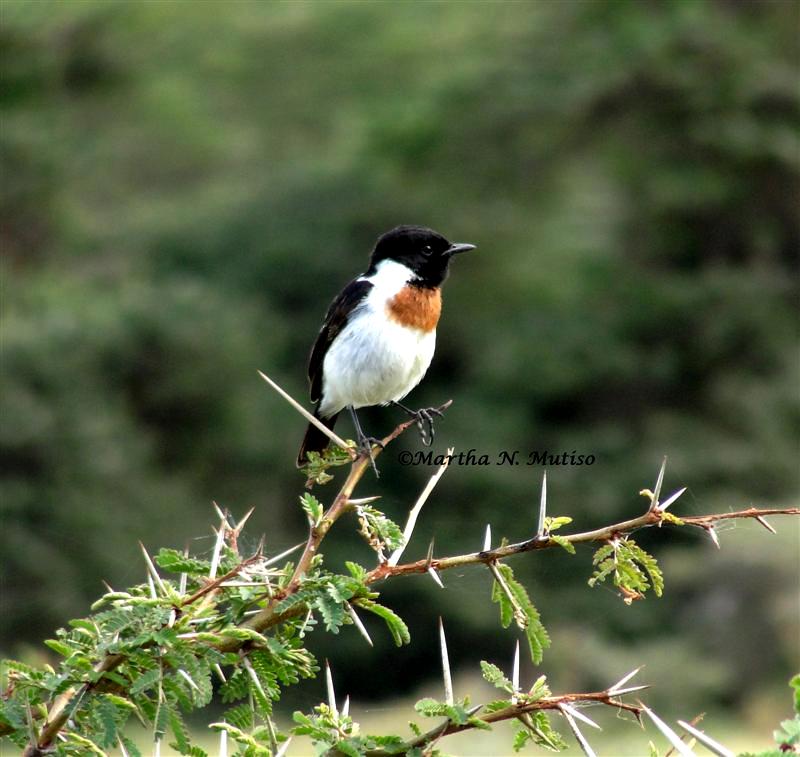
A Common Stonechat near the lake

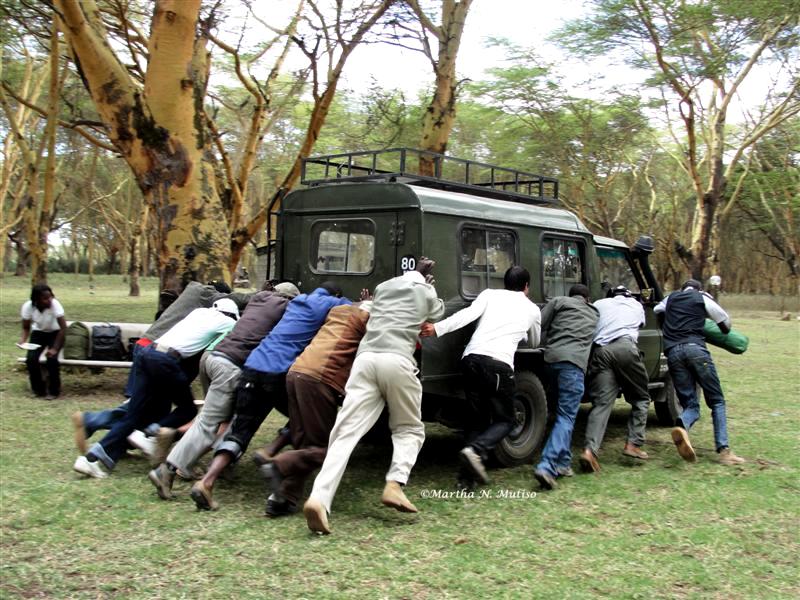
One of the cars, which had to be given a push before boarding it

Lake Naivasha’s biodiversity is critically threatened by habitat destruction; pollution from pesticides, herbicides and fertilizers; and water abstraction. A population of over 250,000 people lives around the lake. The population has converted wetlands into agricultural lands, residential areas, and tourist hotels. The continued harvesting of papyrus along edges has also destroyed the natural state of the lake.

Waterfowl Census at Lake Nakuru National Park

The second counting destination is Lake Nakuru, which is an alkaline lake in the Rift Valley. It is also designated as a Ramsar and a world heritage site. The lake has been the home for lesser flamingos for many years. However, this time around there were more pelicans and storks than flamingos. The inflow of fresh water has led to the dilution of the water salinity hence reducing the production of blue algae, which is the main food for the flamingos.

So we counted fewer numbers of flamingos than previous years, and the pelicans and other waders seemed to be doing well in the lake. Here are some images from the census. The flamingos have then shifted to the neighbouring Lake Oloidien.

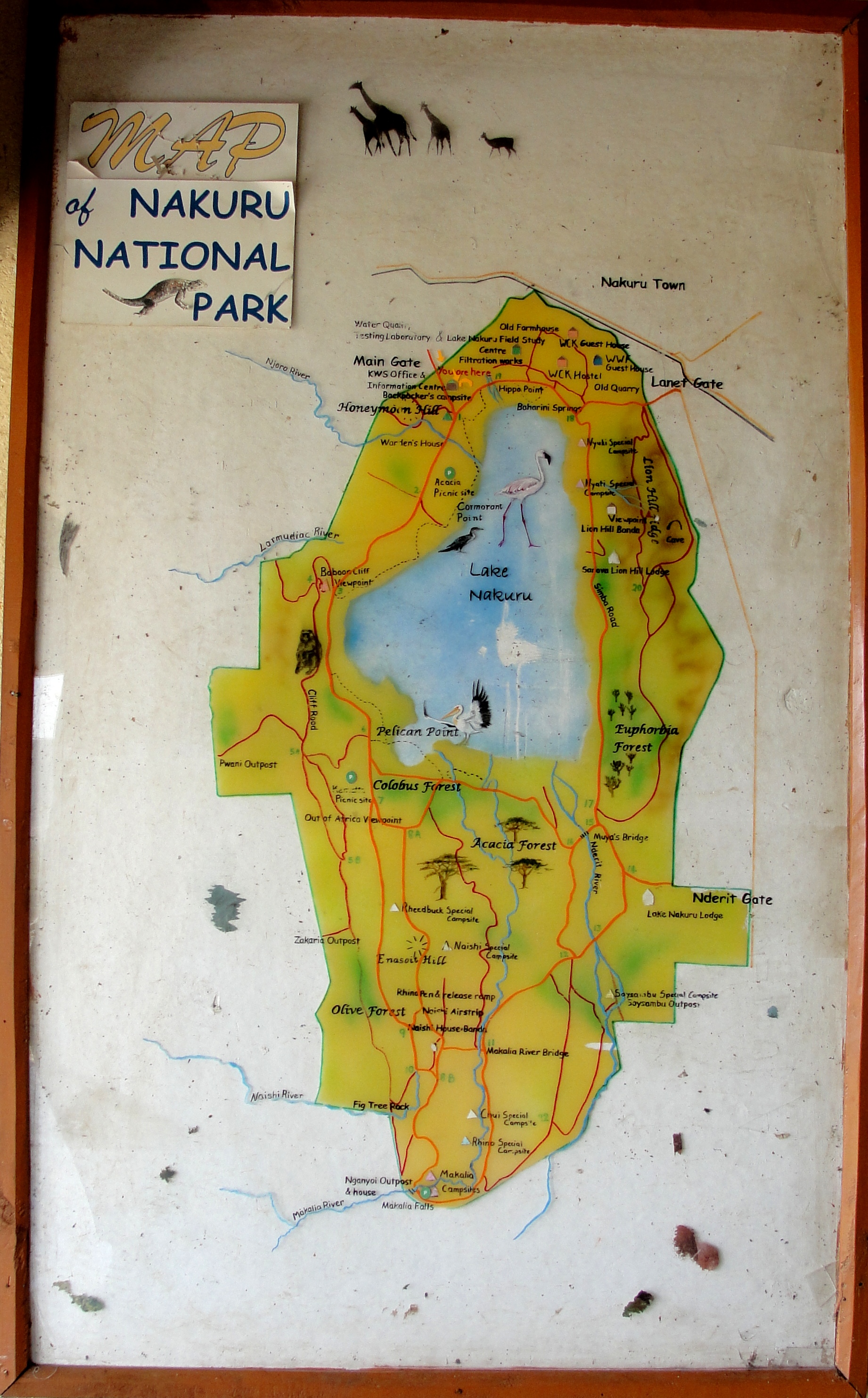
A map of the lake

Sunset

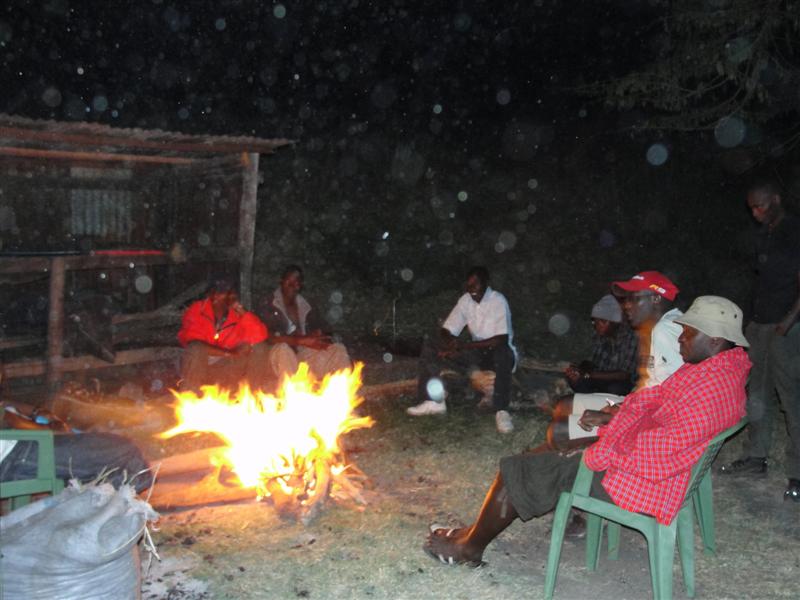
Campfire

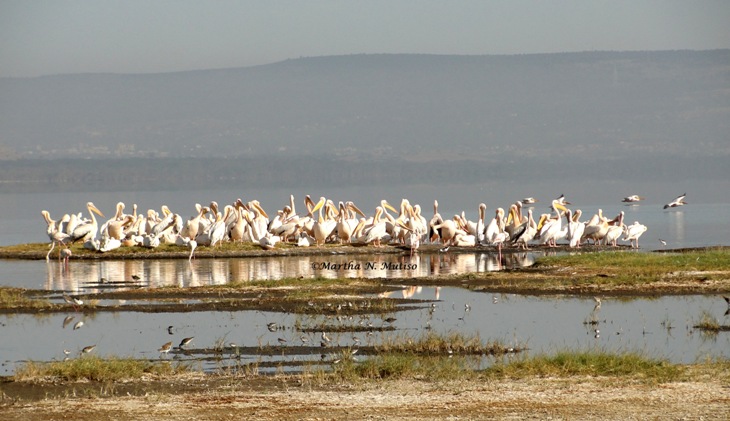
Great White Pelicans

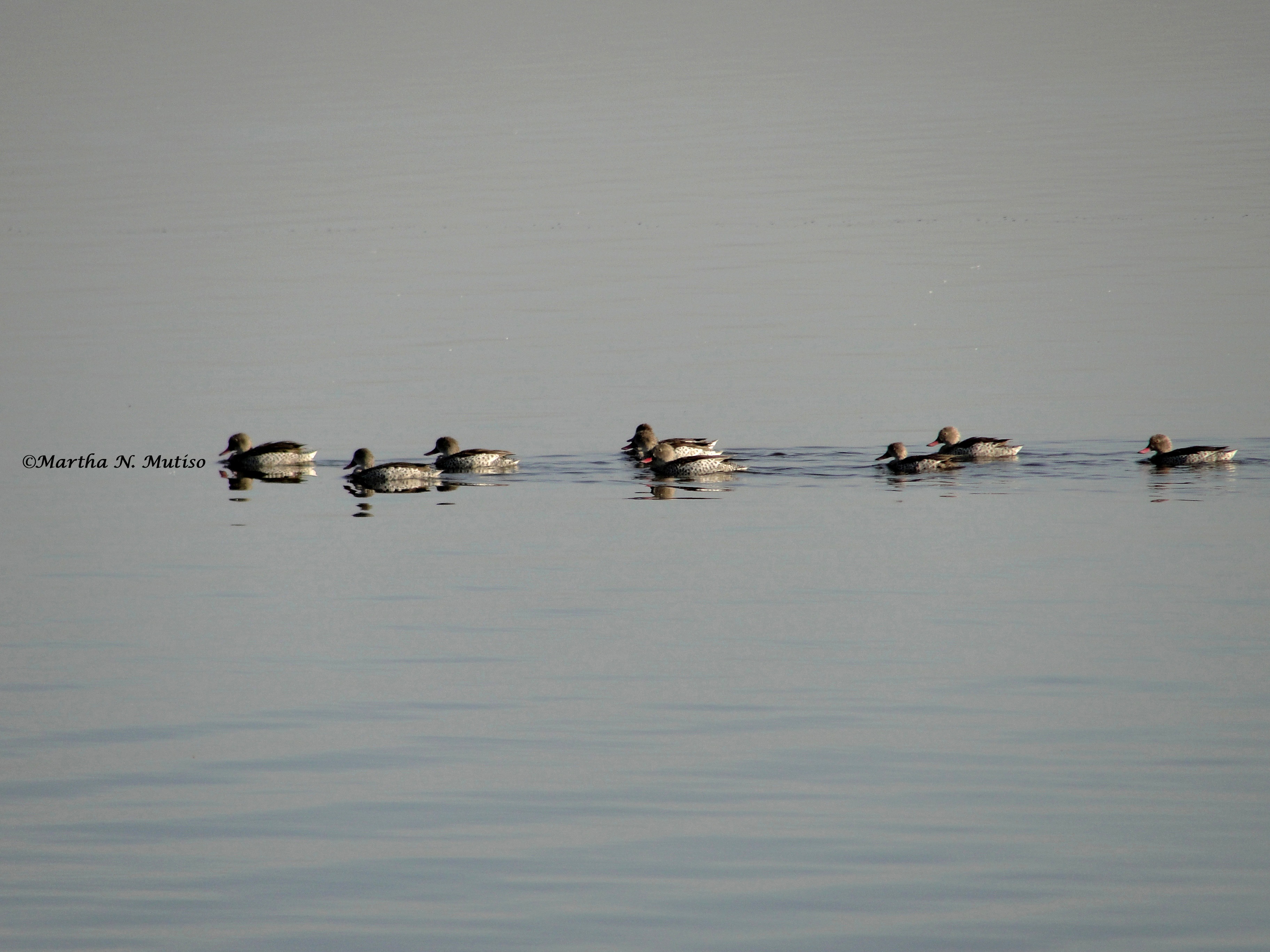
Cape Teals

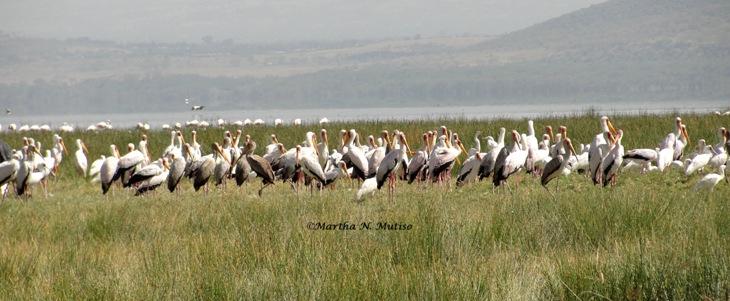
Yellow-billed Storks

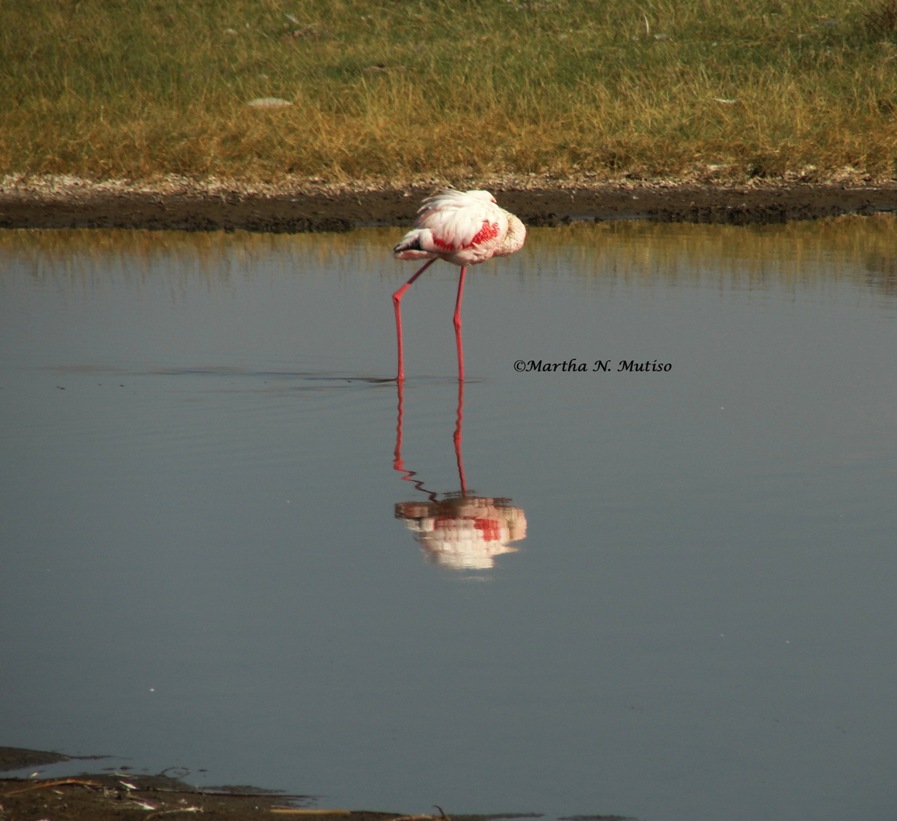
This flamingo was walking with its head tucked under the wings..

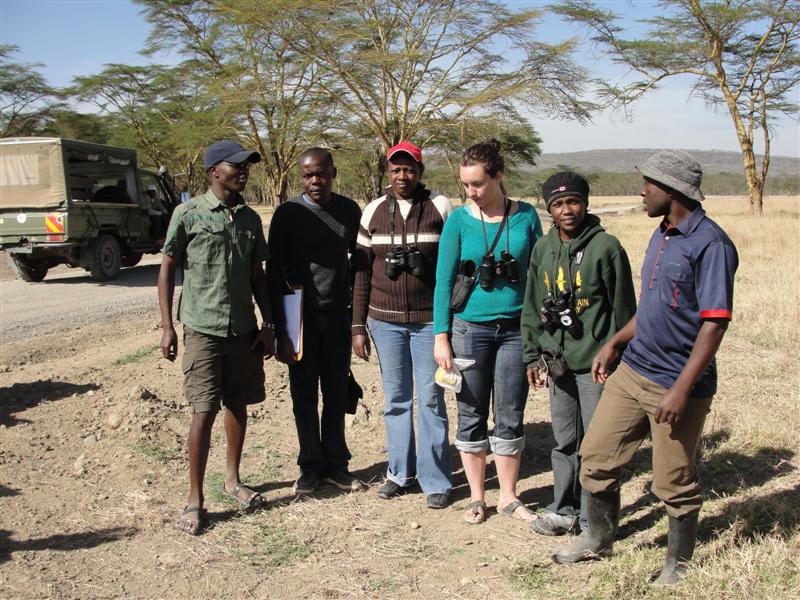
With my counting group; Peter, Dennis, Anita, Manon, and Fred

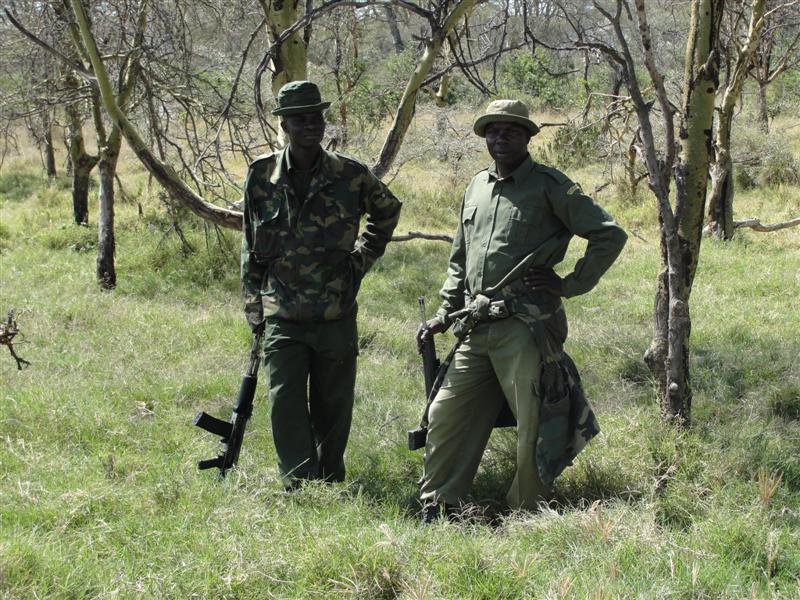
Kenya Wildlife Service Rangers watching out for the buffaloes

Waterfowl Census at Lake Bogoria National Reserve

The African waterfowl census is an ongoing waterbirds and wetlands monitoring project in Kenya that has been taking place for the last ten years. It’s a collaboration project between the National Museums of Kenya, Kenya Wildlife Service and Nature Kenya and is coordinated worldwide by the Wetlands International. The National coordinator for Kenya is the Ornithology Section of the National Museums of Kenya. It covers major lakes and other wetlands in Kenya. The main idea is estimation of bird numbers in a particular wetland. A short briefing is normally held prior to the counting activity and this is used to familiarize the participants with water birds and other monitoring techniques. The participants are then divided into smaller groups and cover a certain area of the wetland.

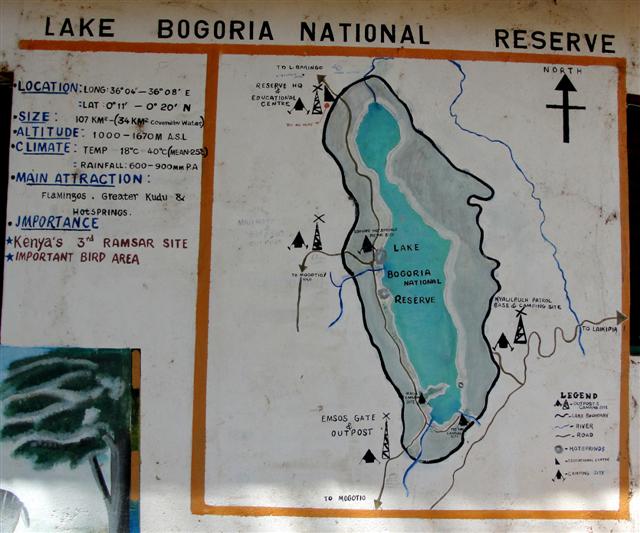
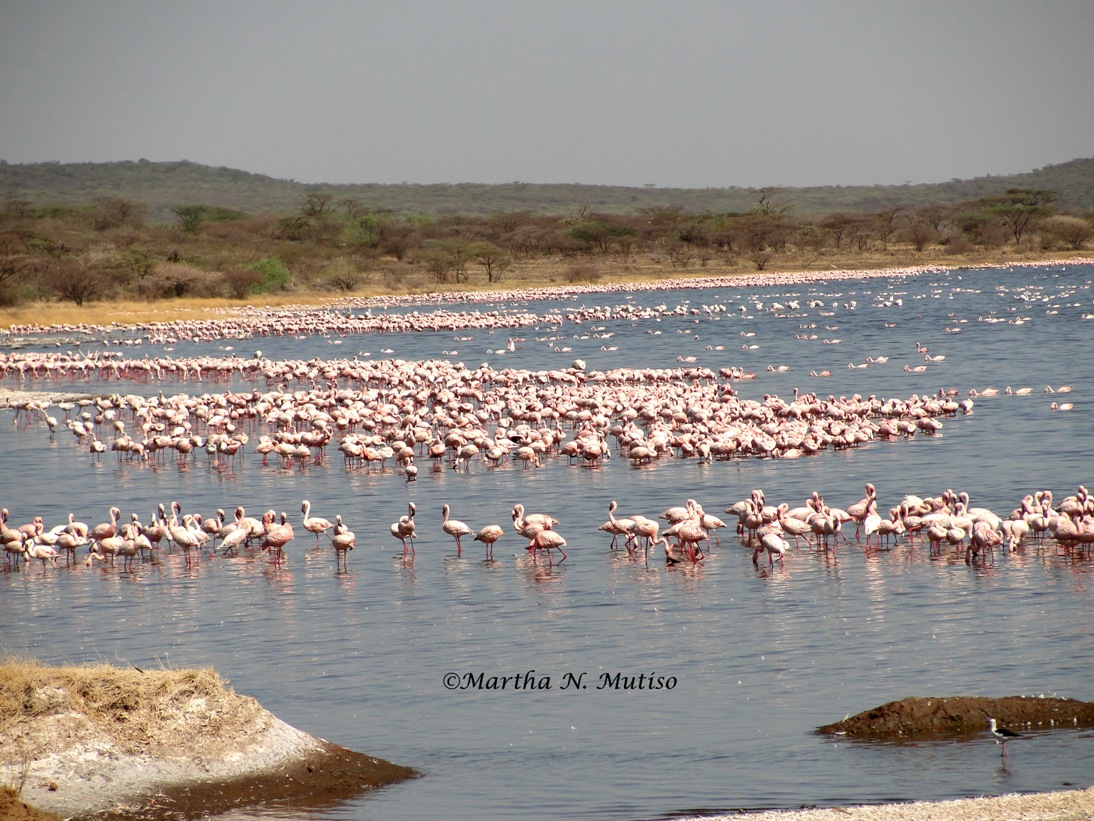
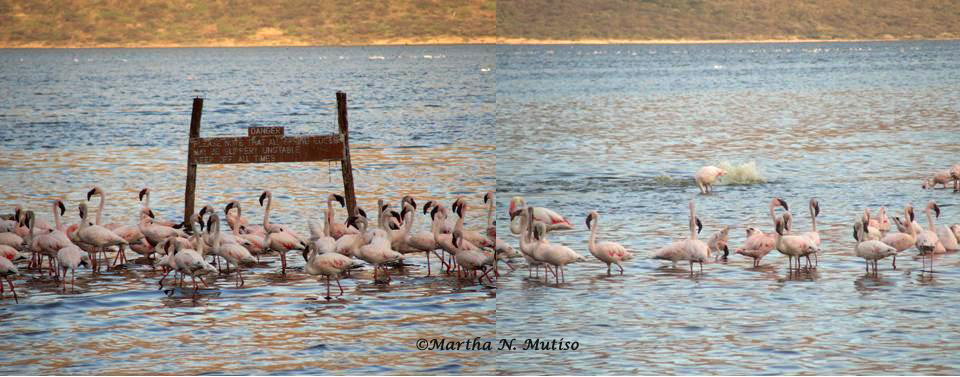
The first counting site this year was Lake Bogoria in Rift Valley. Lake Bogoria is an alkaline lake is currently home to one of the world’s largest populations of flamingos. It also has the highest number of hot springs and geysers in Kenya. The water level is high this year and most of the hot-springs are covered. Apart from the flamingos, other waders are also found in and around the lake, these include Plovers, Storks, Sandpipers and birds of prey, some of which are Eurasian migrants. Below are some images from Lake Bogoria.

An artistic image of the lake

Lesser flamingos and greater flamimgos on part of the lake

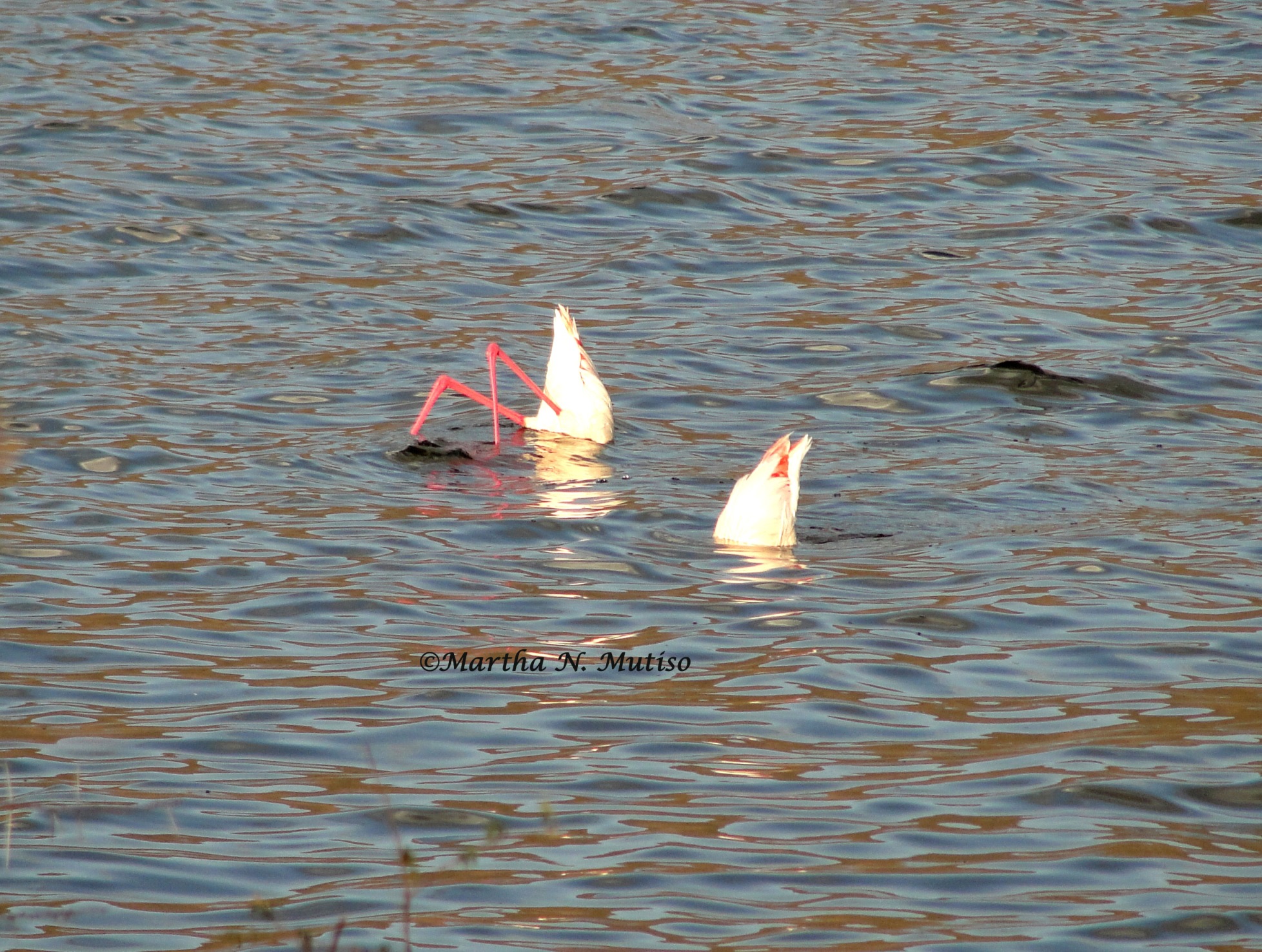
Greater flamingos feeding in the lake

Hot-springs fully covered by water. The post is normally not in the water.

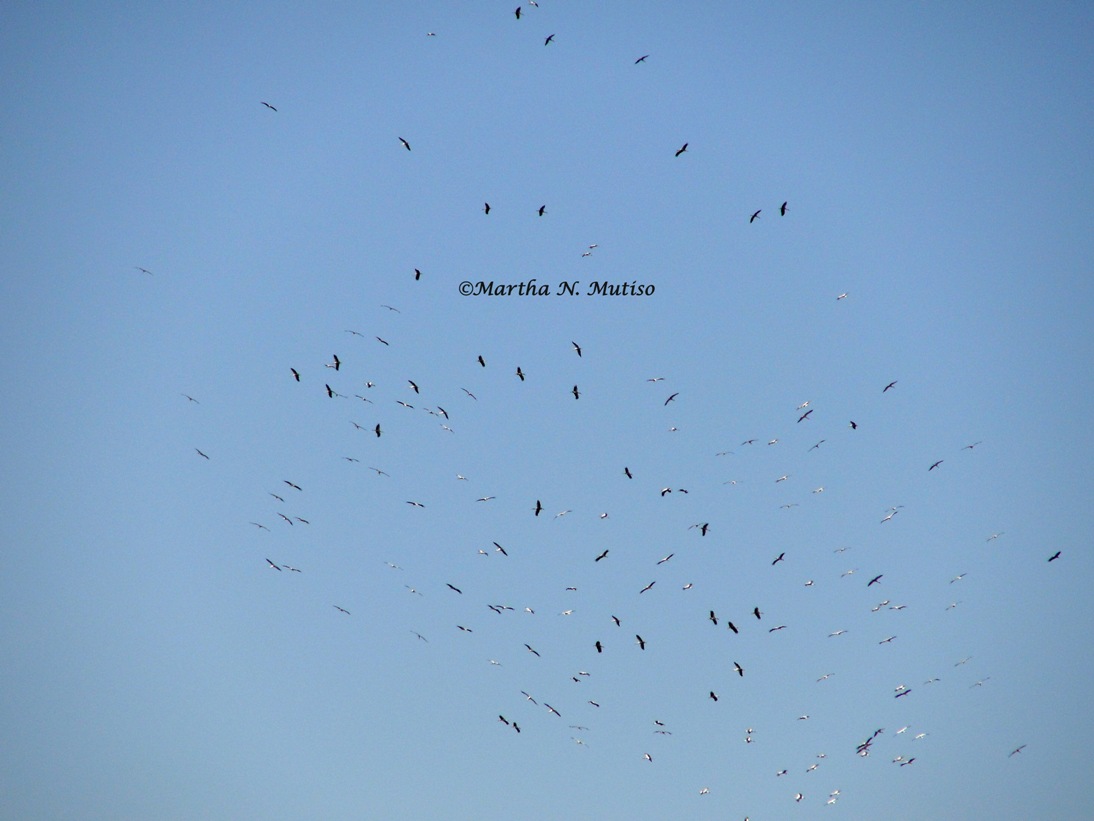
A flock of White Storks and Yellow-billed storks

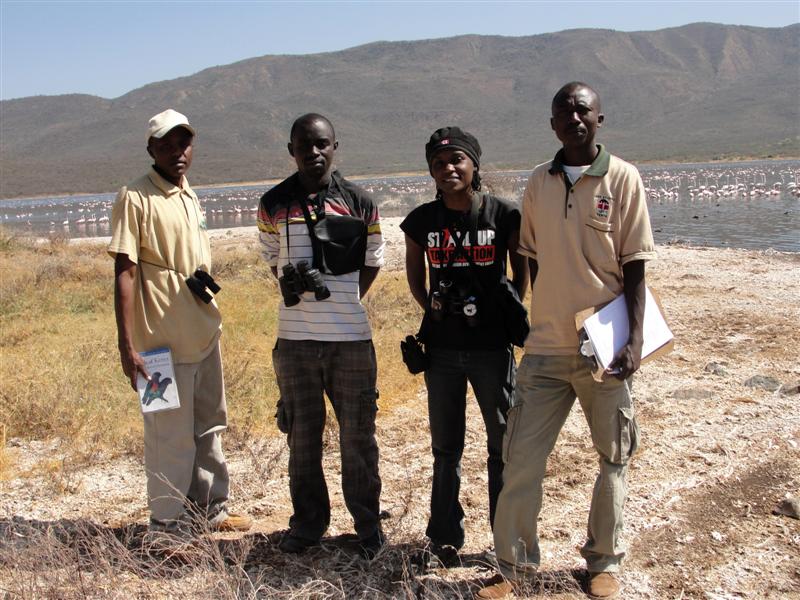
My counting team; Matthew, David and Anthony

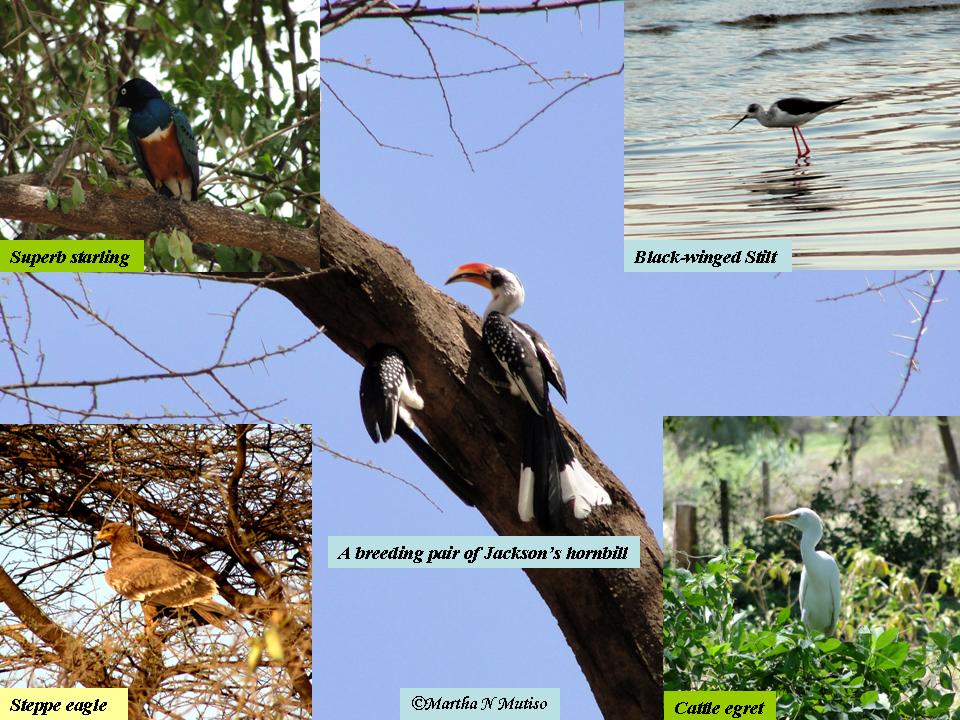
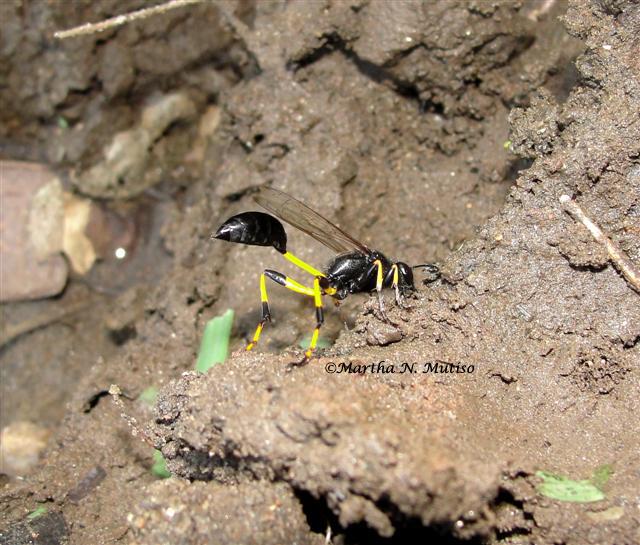
Other birds

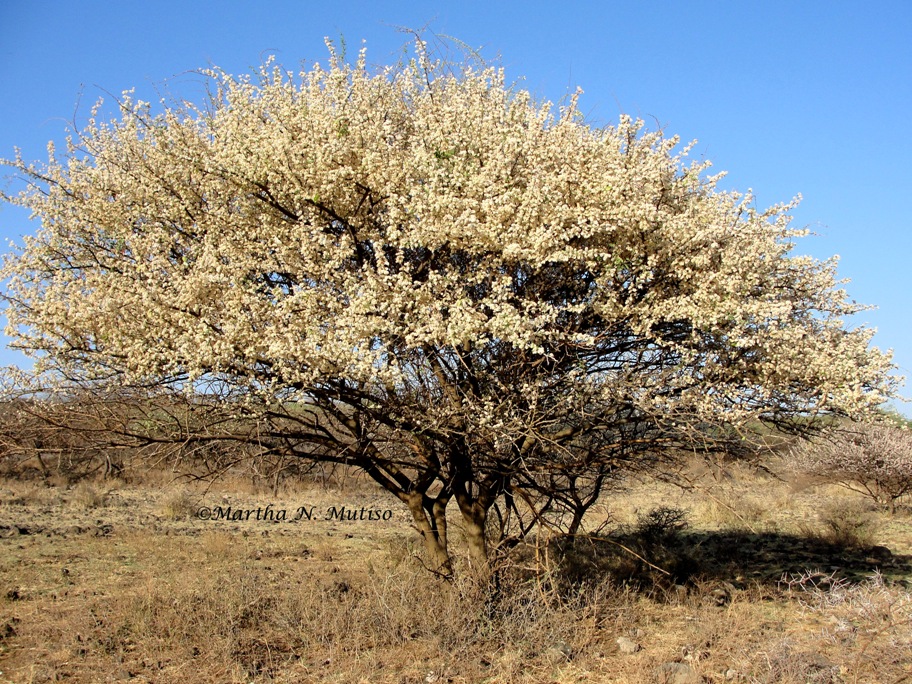
A flowering acacia in the park

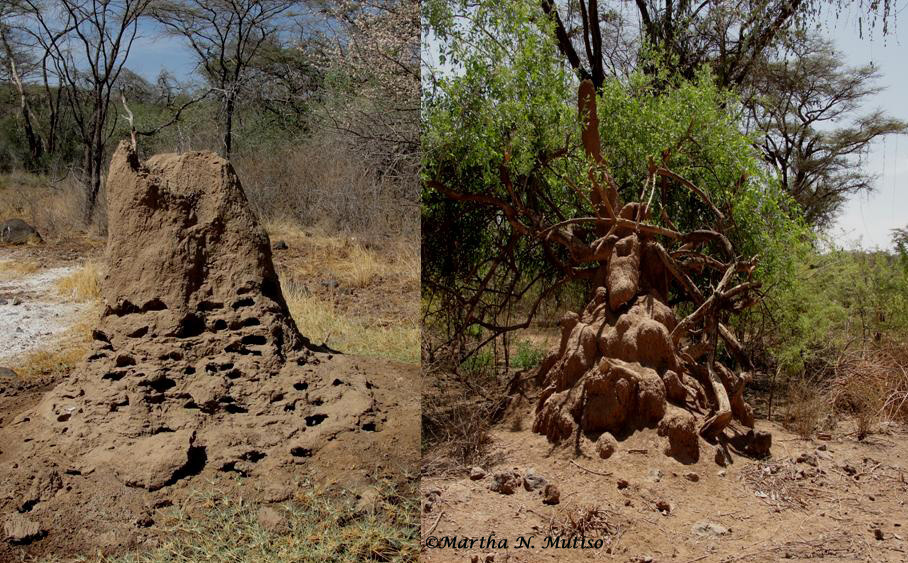
Termite mounts in the park

The Marangu hike

On new years day some CWYUVIKIUTA members went for a hike in Marangu in Kilimanjaro region, Tanzania. Marangu is a small and busy center of tourism, especially for climbers who want to climb Mt. Kilimanjaro. The word Marangu means a place with too many water streams.

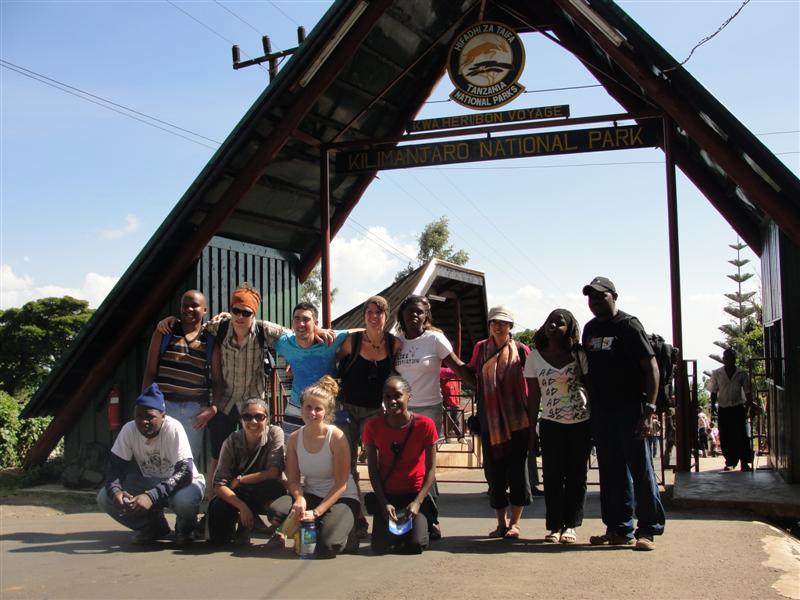
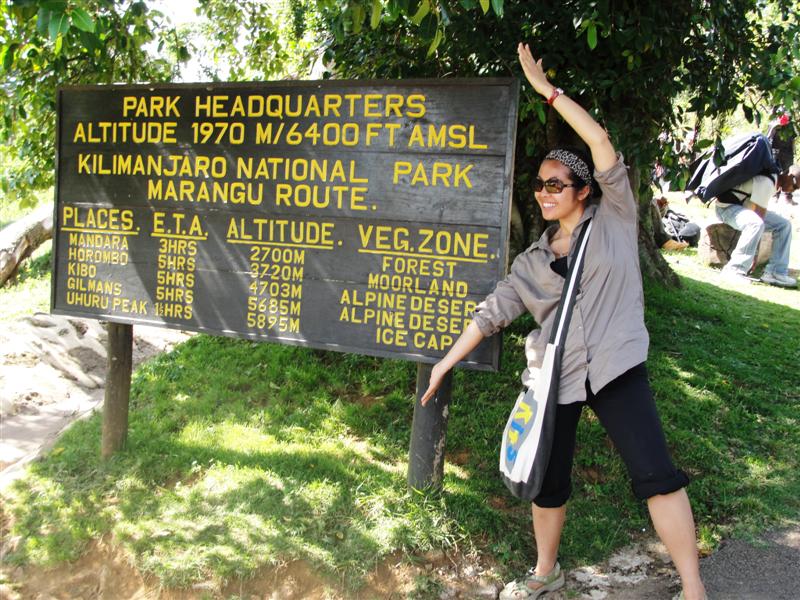
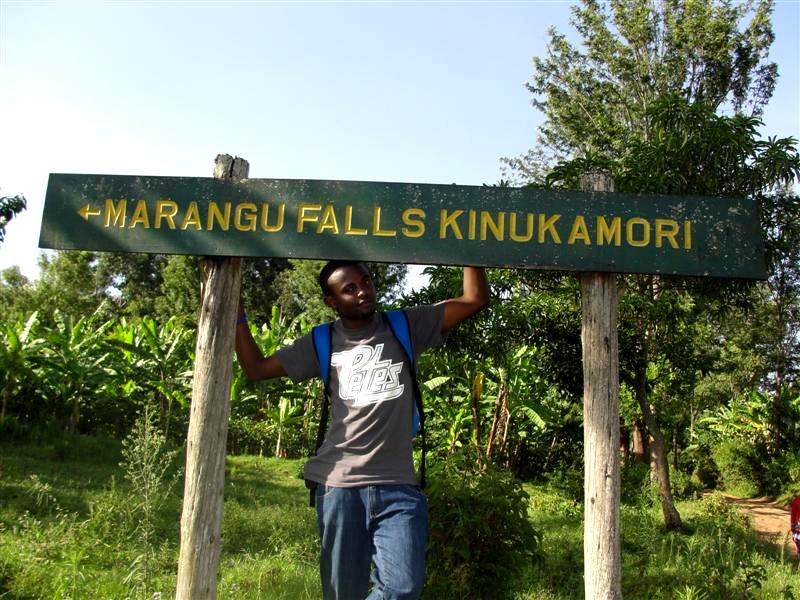
After a taxi ride to the entrance of Kilimanjaro National Park we spent at least half an hour, taking photos and waiting for a guide to give us the park’s information, but he didn’t come and so we continued with our hike, after getting some information sheets. After an hour’s trek we got to the Kinukamori waterfalls, which is located at the foothills of Mt. Kilimanjaro and whose crystal clear water originates from the natural springs of volcanic rocks on Kilimanjaro.

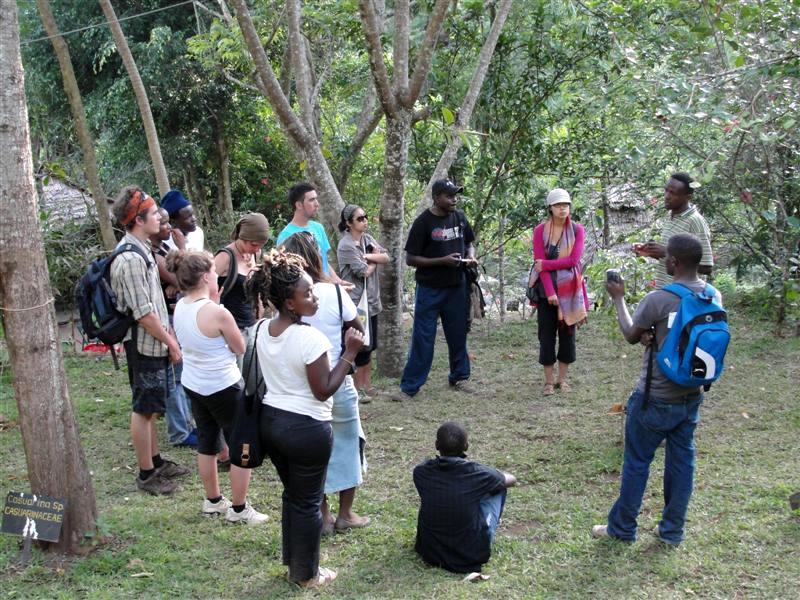
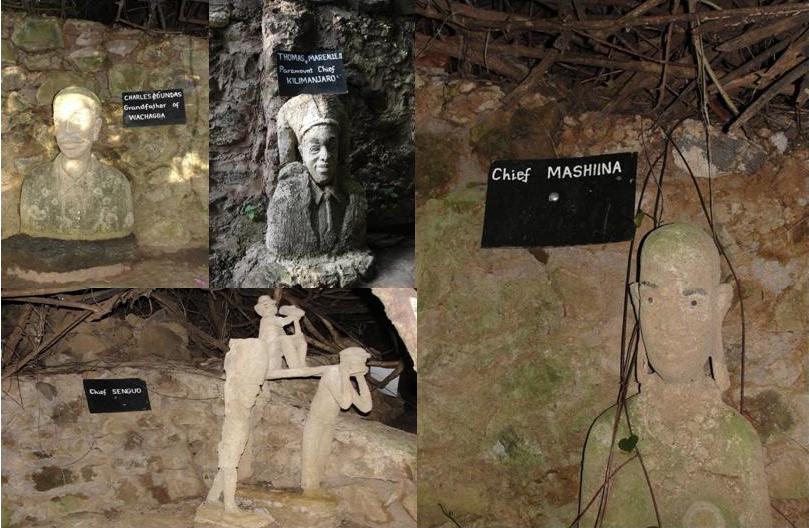
We also went into the hall of Chagga culture after a short briefing by our guide. The Chagga people are Bantu-speaking and the largest ethnic group who live at the slopes of Mt. Kilimanjaro. They descended from various Bantu groups who migrated from the rest of Africa into the foothills of Kilimanjaro and speak a number of related Chagga language dialects. The Chagga area is traditionally divided into a number of chiefdoms, which were displayed by use of sculptures in the hall of the Chagga culture.

Below are some pics of the hike..

Brief stop at the Kilimanjaro National Park, which is also a World Heritage Site.

Inside the park

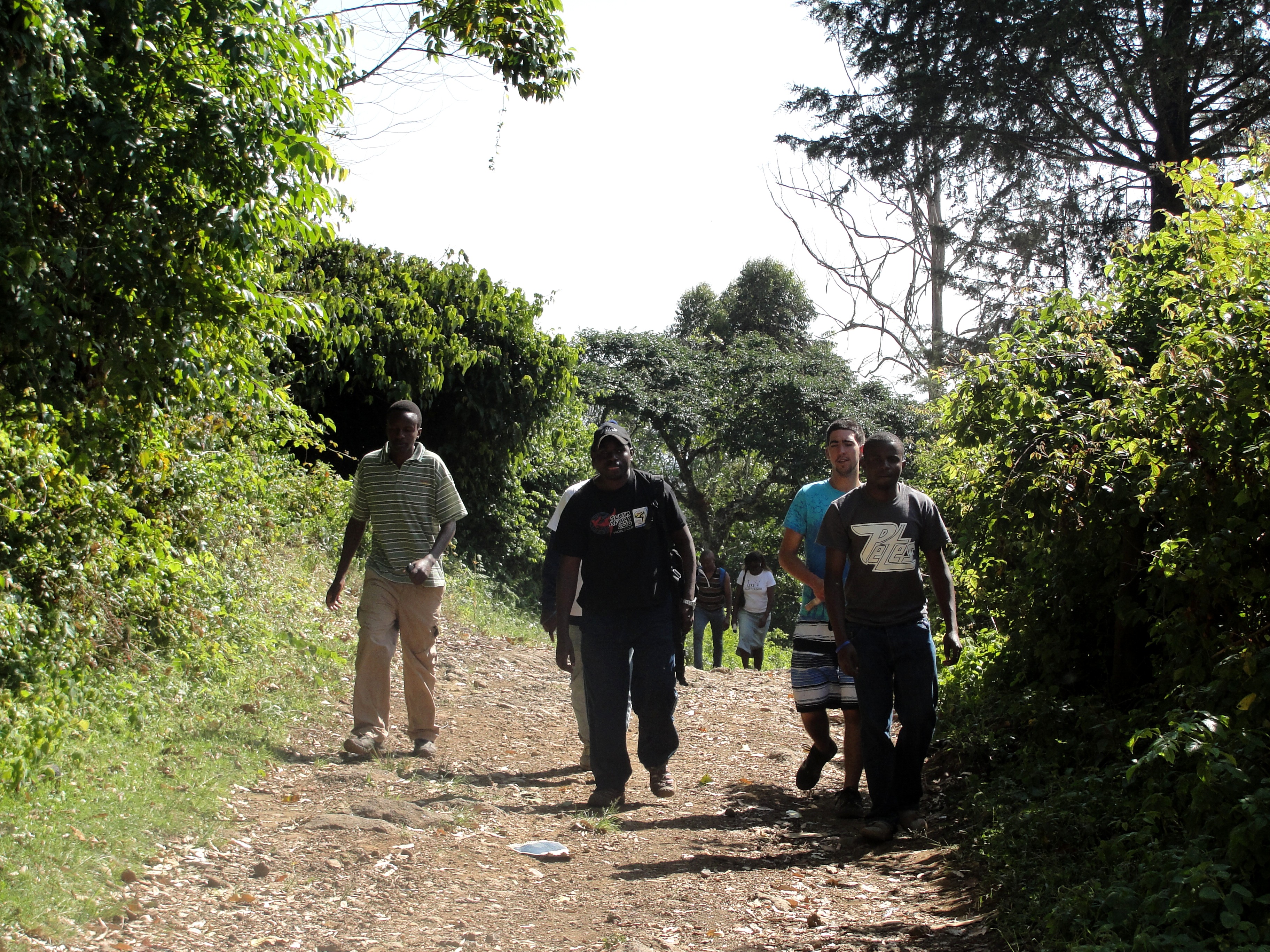
The hike

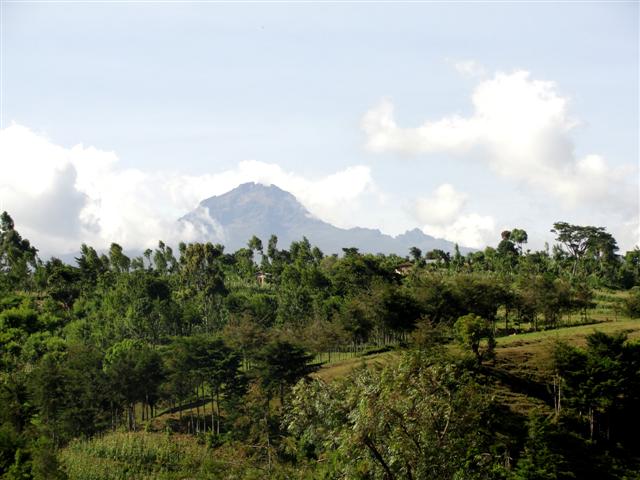
Landscapes along the way

Some biodiversity along the way

A group rest along one of the streams

At the entrance of the Kinukamori waterfalls

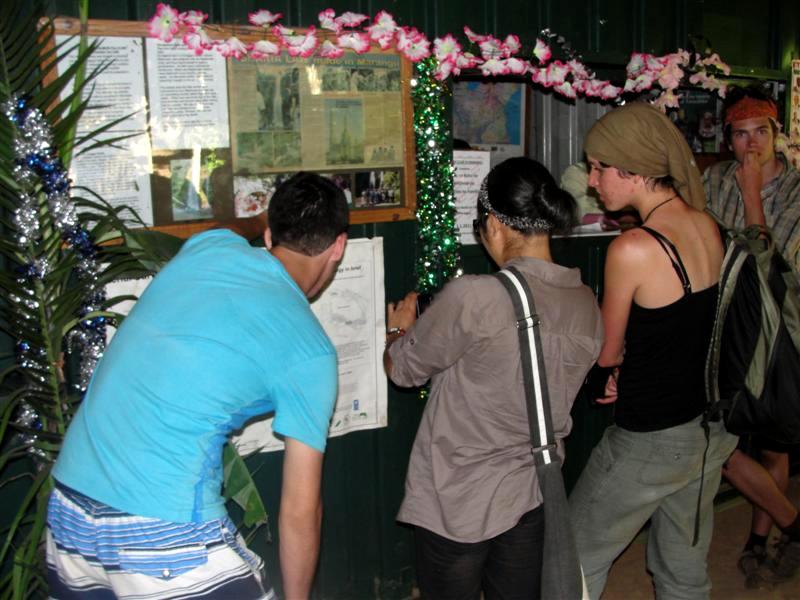
Getting some information before going into the falls

Briefing before going into the hall of Chagga culture

Chiefdom sculptures inside the hall of Chagga culture

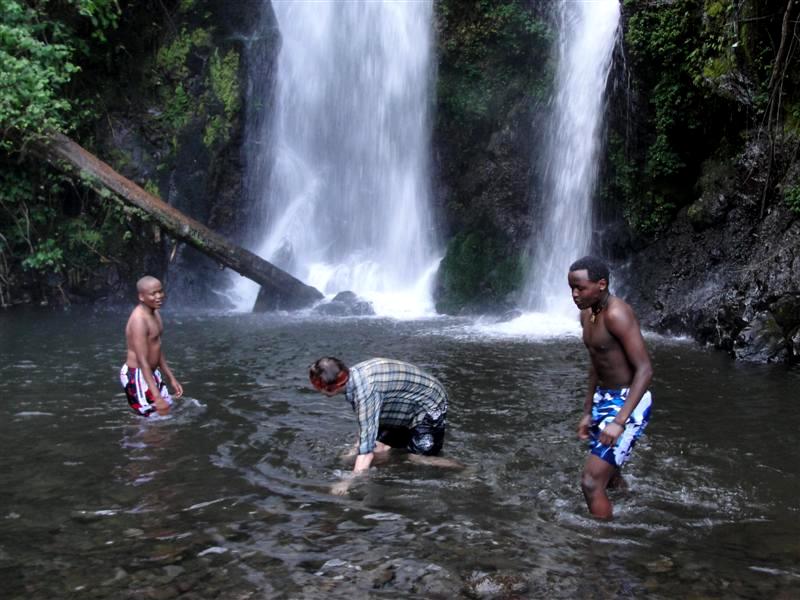
Swimming at the waterfalls

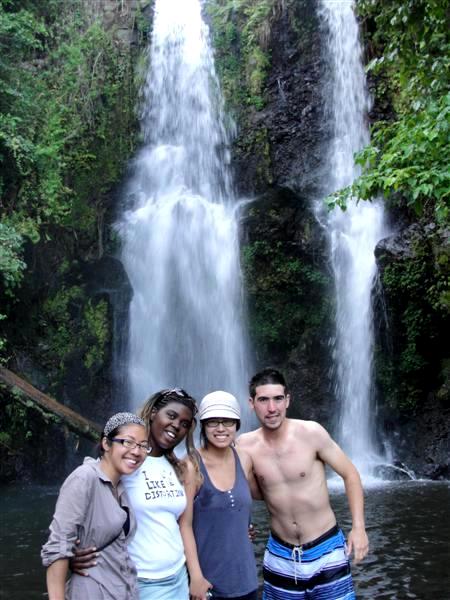
Photo-shoot at the waterfalls

Refreshments after the hike..

The group left the following day for Dar Es Salaam, where they will be living with local host families and working with the local community for two months.

Community Service in Mwika, Tanzania

I was happy to spend time with Canada World Youth-UVIKIUTA Program’s participants in Mwika, Tanzania on New Year’s Eve and New Year.

Canada World Youth (CWY) is a national non-governmental organization that designs and delivers international educational programs for young adults. It was founded in 1971 by the late Senator Jacques Hébert (1923-2007), a former Senator who was profoundly dedicated to youth and to greater intercultural understanding. The CWY Program is an exchange program that takes place between Canada and other developing countries around the globe, (Canada and Tanzania in this case). UVIKIUTA is an independent non-governmental organization in Tanzania that works with youth. It was created in 1983 following a proposal in which the Government of Tanzania invited unemployed youth to group together in order to receive assistance. Uvikiuta’s projects focus on income generation, employment, and nutrition.

I was visiting my friend, Kyle, who we met in a youth leadership conference while I was doing a similar program in Canada, and our friendship grew over time. The group, which spent three months in Peterborough in Canada, is now on their second phase of the program in Dar Es Salaam, Tanzania. I got to spend time with them and it was interesting to note that they had similar joys and challenges like our group had two years ago, and that they worked together as a team, just like our group. They performed a dance and it was the highlight of the day and the most hilarious dance that I’ve ever seen.

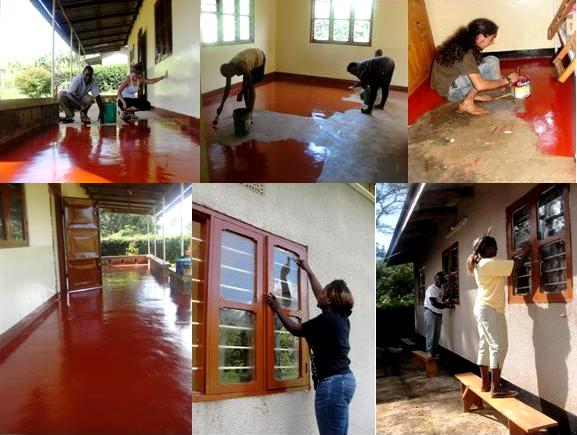
During their group living time in Mwika, they lived in the same house (separate houses for male and female) for three weeks and performed in-house and group duties together, interacted with local community and volunteered in the community. They planted more than 500 trees in the village, repainted the local health center and did a community impact assessment on the impact volunteers and volunteerism has on the community.

They will be spending the next two months in Dar Es Salaam, Tanzania after they spent three weeks of group living in a small village located two hours away from Moshi.  They will be living with local host families and working in the community, in different work placements that focus on education, agriculture, information technology, environmental issues and working in orphanage among others.

We later went for a hike and visited a waterfall which was an hour away (or so we thought) but it kept getting further; more on the hike later…

For more information about the Canada World Youth’s programs and partners around the world,  please visit their website.

Repainting the windows and floors at the local health center

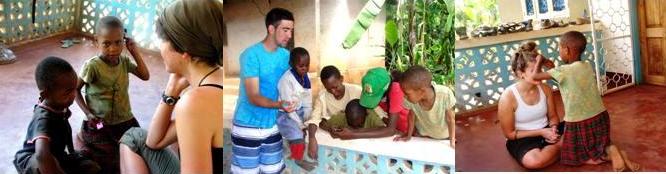
Interacting with the village kids

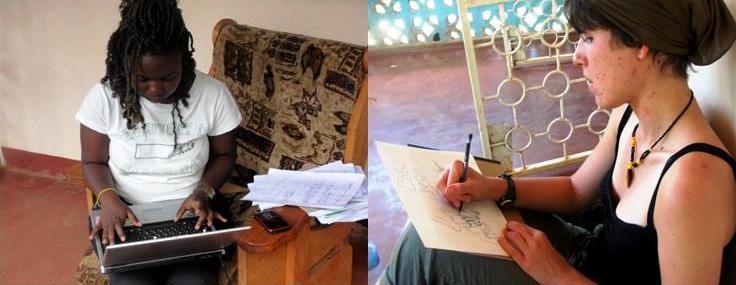
Data entry on community impact assessment and sketching the local dala dalas (local transport).

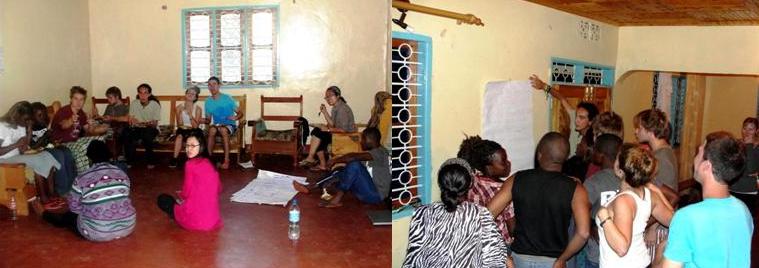
Group meals-Lunch  and finding out about host families in Dar Es Salaam

The program supervisors-Alana McGoldrick and Robert Balidyan

CWY hiking post soon 🙂


Up and About

As the festive season kicks in, i wish to thank my readers for your kind comments. I wish you all  a happy festive season, happy travels and best of celebrations. May  God’s cheer spread all over the world. I wish you God’s blessings.

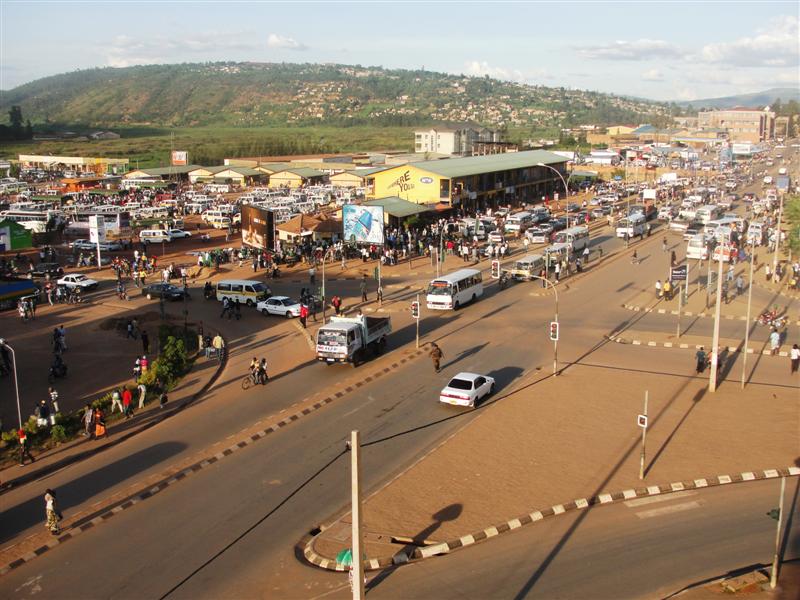
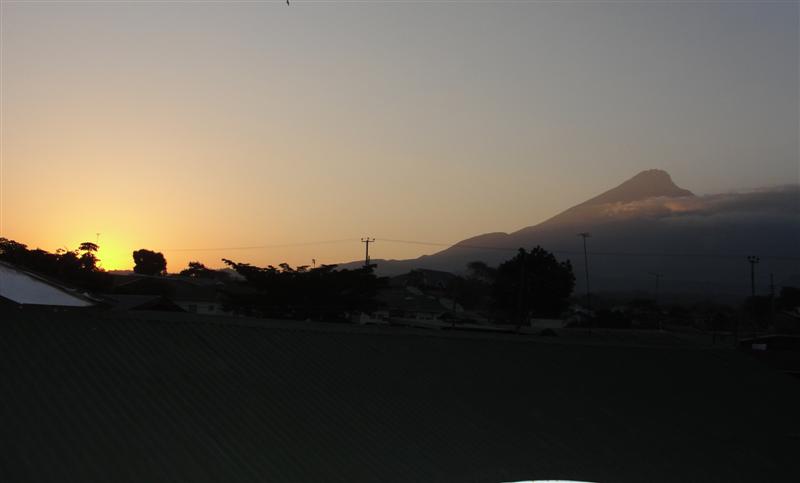
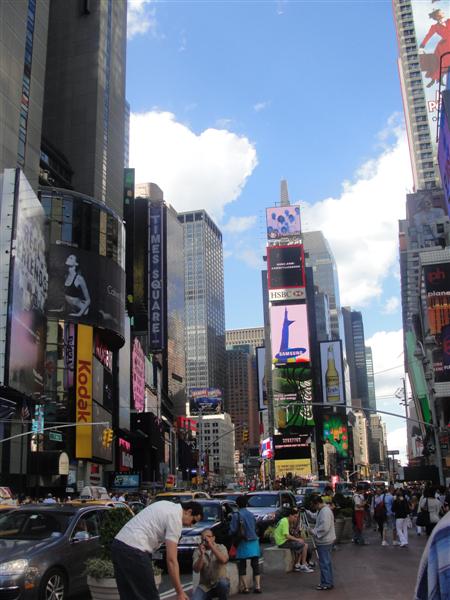
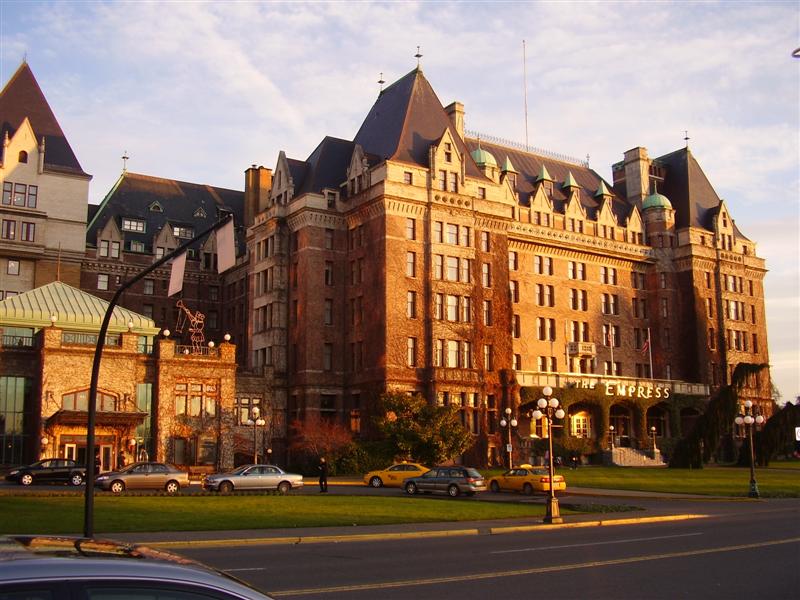
Here are some pics from around the globe.

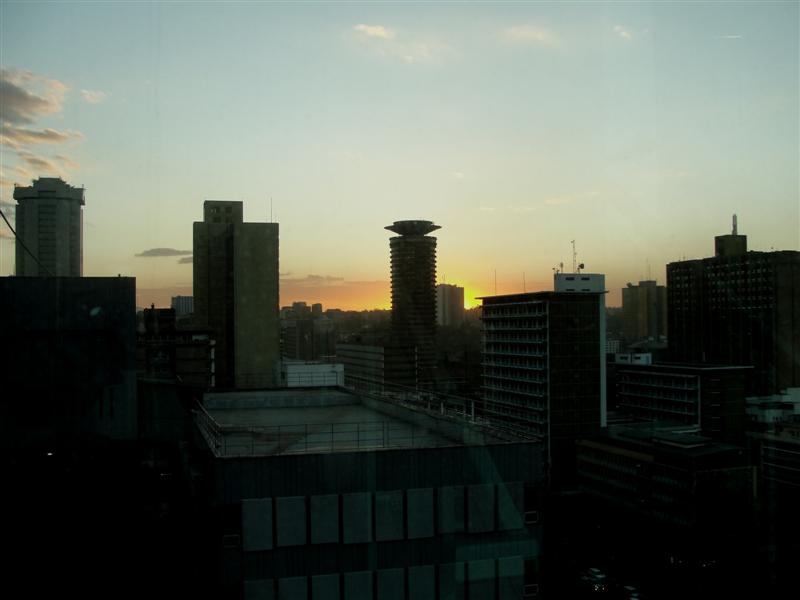
Kenya’s Capital City, Nairobi

One of the cleanest City in East Africa, Kigali, Rwanda

Sunset over rooftop, with Mt Meru in the background. Arusha, Tanzania

Taxi park, Kampala town, Uganda

Busy streets of New York City, U.S.A

The Empress Hotel, Victoria City, British Columbia, Canada

All photos©Martha N. Mutiso

Merry Christmas and Happy new year.

Back to Eden-Yatta District, Eastern Province

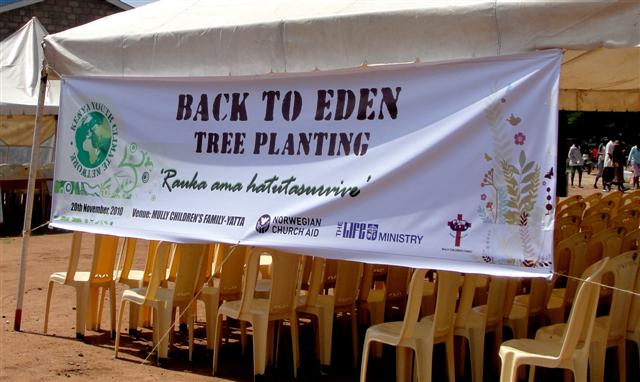
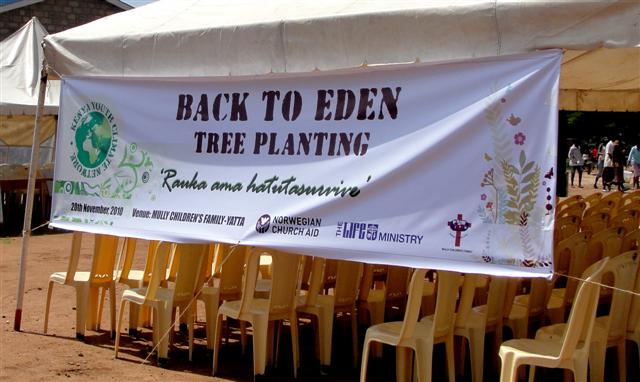
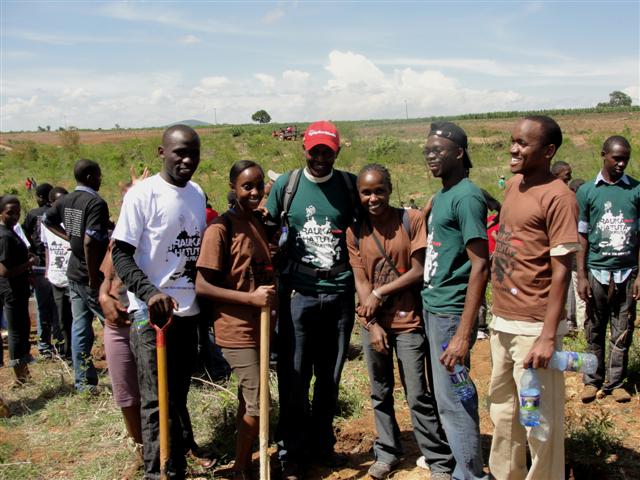
I recently participated in a tree planting event in Yatta District. The event, termed “Back to Eden” was organized by The Norwegian Church Aid and the Kenya Youth Climate Network (KYCN) in partnership with the Office of the Prime Minister and was held at the Mully Children’s Family (MCF) grounds in Yatta District. The Mully Children’s Family is a non-governmental organization that has seen the rehabilitation, shelter and education of more than six thousand street children in Kenya. They still continue to bring more children out of the streets across the country.

The Kenya Youth Climate Network is a youth movement comprised of youth organizations and networks, including Kenya Young Greens (KYG), Africa Youth Initiative on Climate Change (AYICC-Kenya), Korogocho Community radio (Koch FM), Young Environmentalists Network in Africa (YENA), the Third Movement, Inter-varsity Environmentalist Network (IVEN) and World Youth Alliance (WYA) among others. These youth networks have and still continue to mobilize, train and support youth from all over the country to learn and establish initiatives in their communities that tackle climate change, environment and leadership.

The event brought together more than a thousand young adults (including university students, faith based organizations, artists and environmental institutions) and community members. The event was a good opportunity to sensitize youth and general public on the importance of planting and nurturing trees. Some of the tree species planted included acacia, Silk oak, Nandi flame and Fig trees among others.

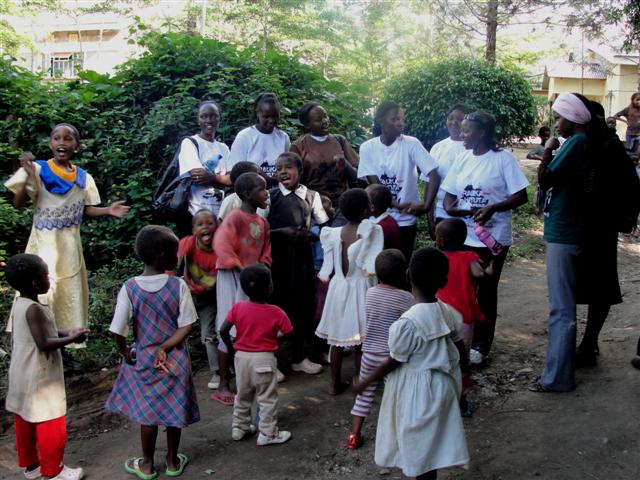
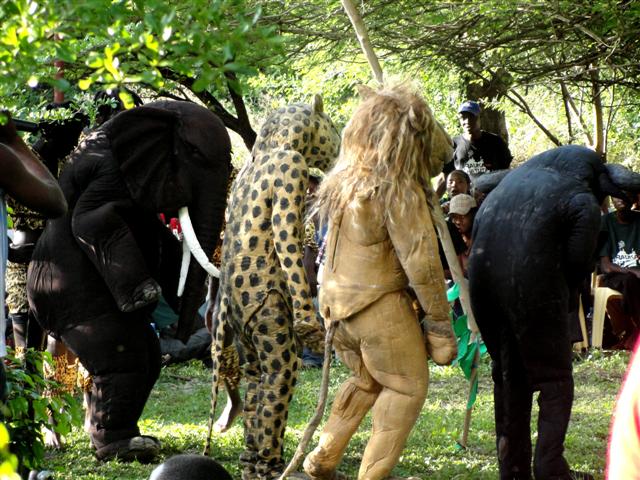
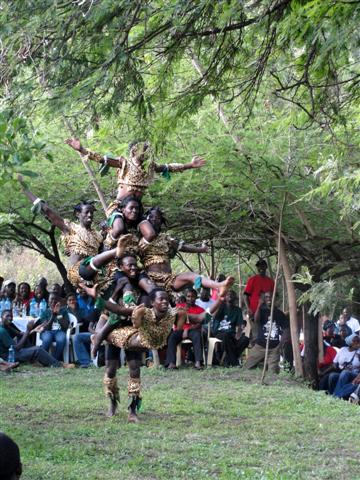
The participants also got a chance to interact with children from the Mully Children’s Family, and the kids’ joy and happiness was contagious. The kids are truly talented; they sang, drummed, played, and also entertained us with acrobatics.

For more information about some of the youth groups and the NGOs involved with climate change, environmental issues and community development, please visit their websites and blogs listed below.

Kenya Climate Youth Network http://kenyanclimateyouth.blogspot.com/

African Youth Initiative on Climate Change http://www.ayicc.net/

Mully Children’s Family http://www.mullychildrensfamily.org

The Norwegian Church Aid http://www.kirkensnodhjelp.no/en/

Here are some images from the event.

The Banner

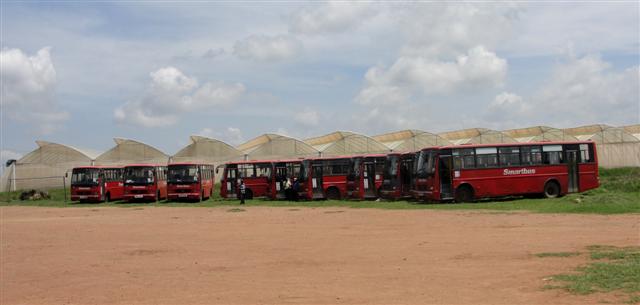
The transport-Smart Bus

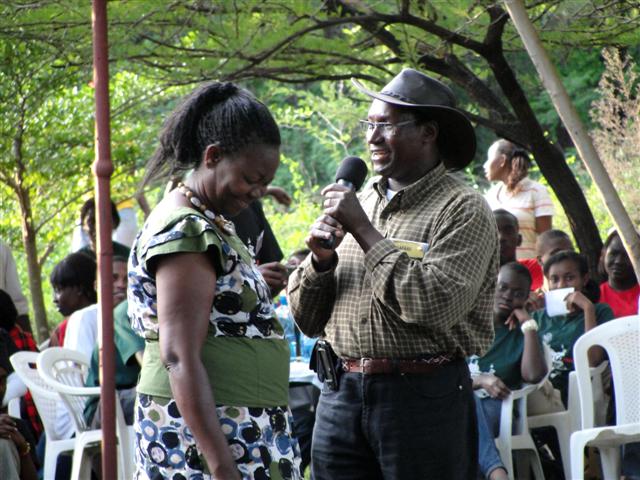
Esther and Dr Charles Mulli-The Mully Children’s Family Parents

Back to Eden Organizing team-Kudos for a job well done

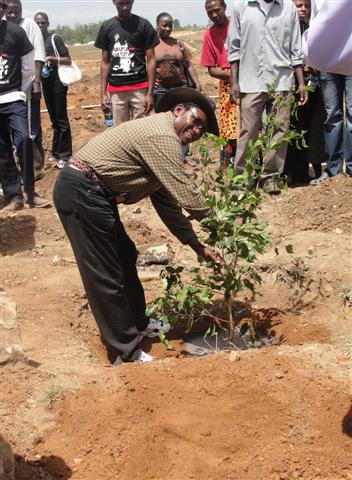
The ceremonial tree planted by our host, Dr Charles Mulli

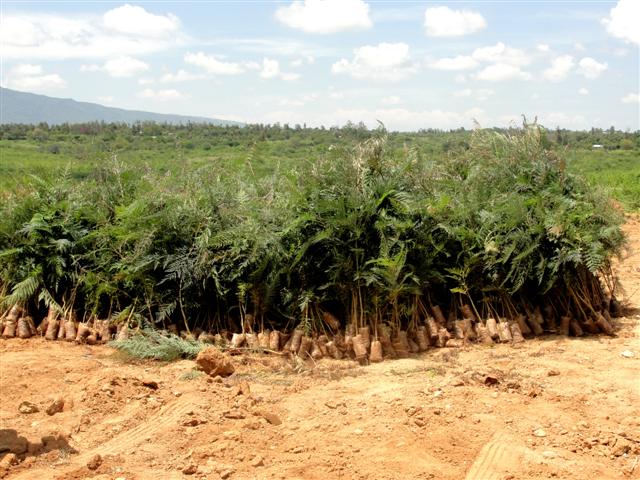
The tree seedlings

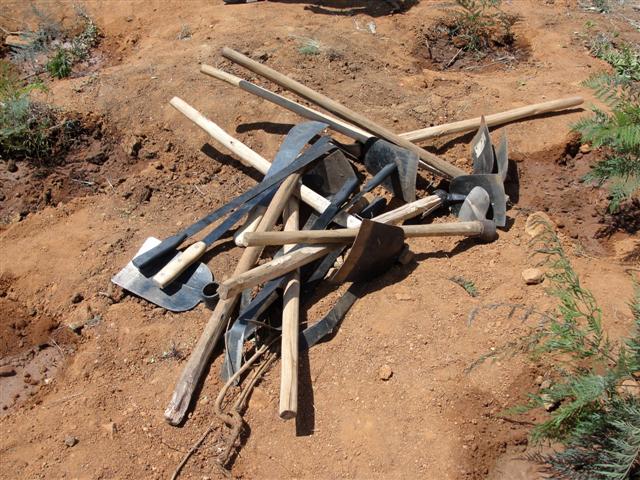
The tools

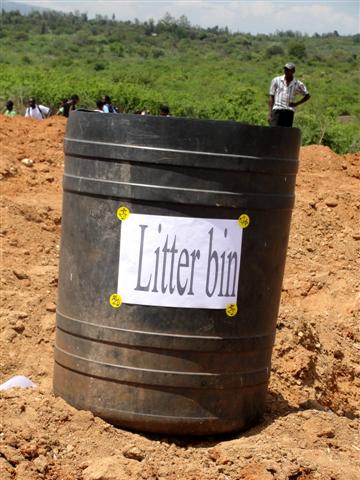
Litter bin for disposal of trash collected after tree planting

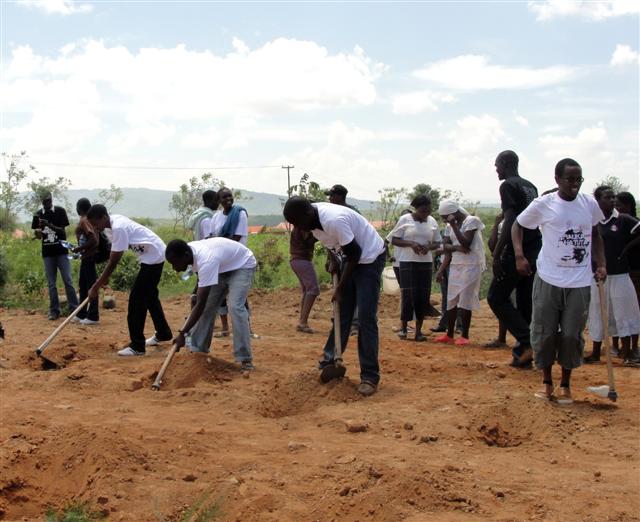
Digging tree holes

Some trees were planted online 🙂

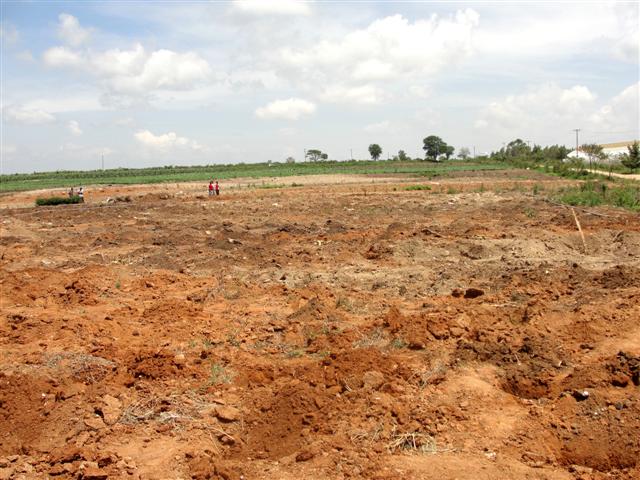
The field, before tree planting

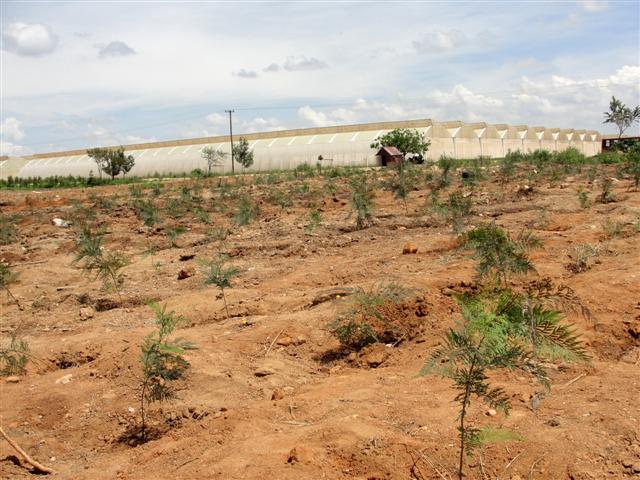
The field, after tree planting

Irrigating some of the trees that were far from the irrigation pipes

PArticipants singing and playing with the Mully Children’s Family members

Entertainment-the Big Five group

Some acrobatics

Photo shoot with fellow participants

More photo shoot

Some biodiversity that couldn’t be ignored…

Congratulations to the young leaders and participants for making it a fun filled event.

Martha