
During a game drive in Nairobi National Park our group was very excited to spot the first Rhino of the day. The Nairobi National Park is one of the safest haven for both Black Rhinos (Diceros bicornis) and White Rhinos (Ceratotherium simum). The two species can be differentiated by their physical appearance, eating habits and social behavior. The White Rhinos are square-lipped, social and grazers; the Black Rhinos are hook-lipped, solitary and browsers.
“Our Rhino” was very far and we all had turns using the binoculars to get a closer look at it. What we couldn’t tell was if it was Black Rhino or White Rhino, we could only see the rump.
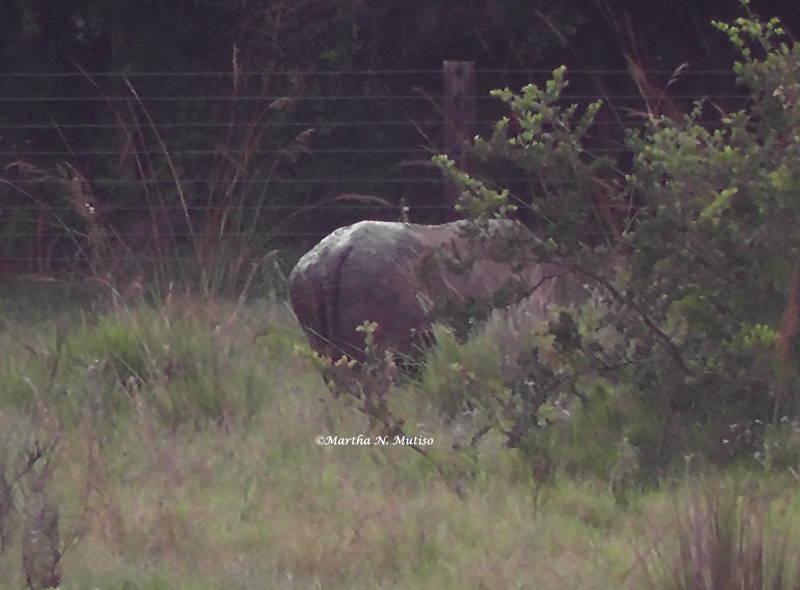
Well, our group was a patient bunch and didn’t mind waiting for the Rhino to lift up its head. It didn’t take very long; it lifted its head to look at us. It was my turn to look the binoculars, and I could see its head very well. The head didn’t look like it belonged to a Rhino and the horns weren’t where they are supposed to be…

It was humorously disappointing, but had a good laugh about our “special Rhino”, which turned out to be a Cape Buffalo. And every day after that, we all laughed and still do laugh at our Buffalo Rhino!!
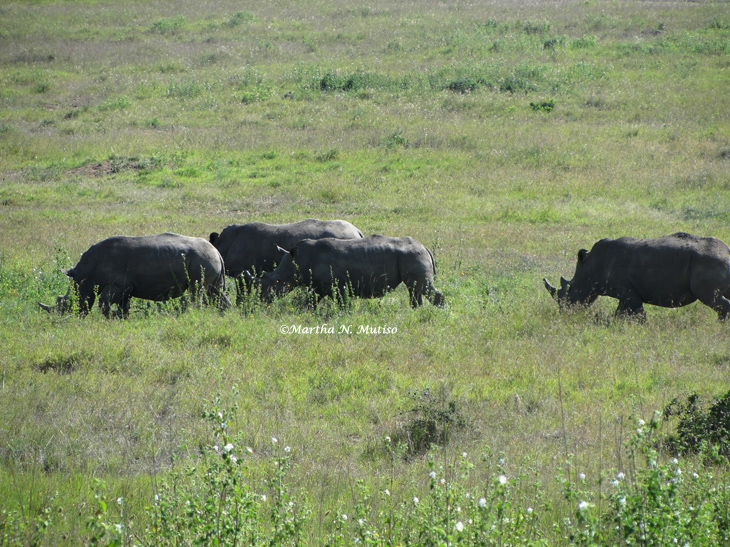
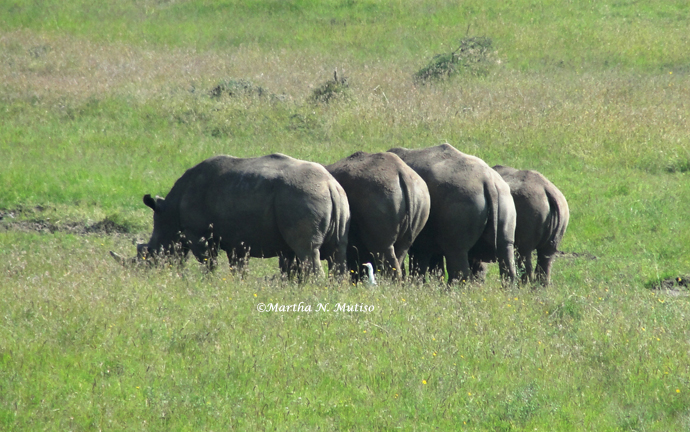
The excitement didn’t go to waste. Before we could call it a day at the Park, we were rewarded by our first sighting of not one but four Rhinos of the day, the White Rhinos. And this time round, we could clearly identify that they were Rhino Rhinos!
We drove back to our camp, and reflected on how the rhino’s population is currently in decline due to poaching, habitat loss and illegal horn trade. We silently hoped that the species would survive long enough for future generations to marvel at their gracefulness and beauty.
 Ecoescapades